Day 235: Side-Car Ride Out to the Cu Chi Tunnels — Cricket-Eating! – Pho At Last
Today was our last day in Vietnam, the cap on three weeks here. Crazy we’ve been here so long. We’ve loved getting to see this place.
It was finally time to dive into the war history. The truth is, it’s hard for an American to go even one hour in this country without thinking about the war. That’s probably the result of consuming so many books, documentaries and mainstream Hollywood movies about it over our lifetimes. The rice paddies, the straw hats…honestly even just saying the name of the country makes you think of it.
Plus, reading “The Lotus Eaters” has brought the war to life for both of us every night when we get in bed.
(Interestingly we’ve only met/seen a very few Americans here the whole time. Almost all Westerners are Euros).
Now was time to immerse ourselves. Our itinerary called for a tour of the Cu Chi tunnels — the Viet Cong’s vast underground network of hand-dug tunnels — and the chance to meet with/hear from a former Viet Cong guerilla veteran.
We kept this one on the itinerary even though we know well by now the kids wouldn’t get it or care. We packed iPads in case. We really wanted to go.
The first part of the day — before we got out to Cu Chi — was super kid-friendly though. Why?
Motorbike side cars!! Ha! We got picked up at our hotel by two guys from Saigon Sidecar Tours, and hopped in — Teddy and James in one, Willa and I in the other. Our guide Chuong rode on the back of one.
We had helmets, surgical masks to protect against the exhaust and dust and stopped to get the kids some cheap roadside sunglasses. And then we were off.
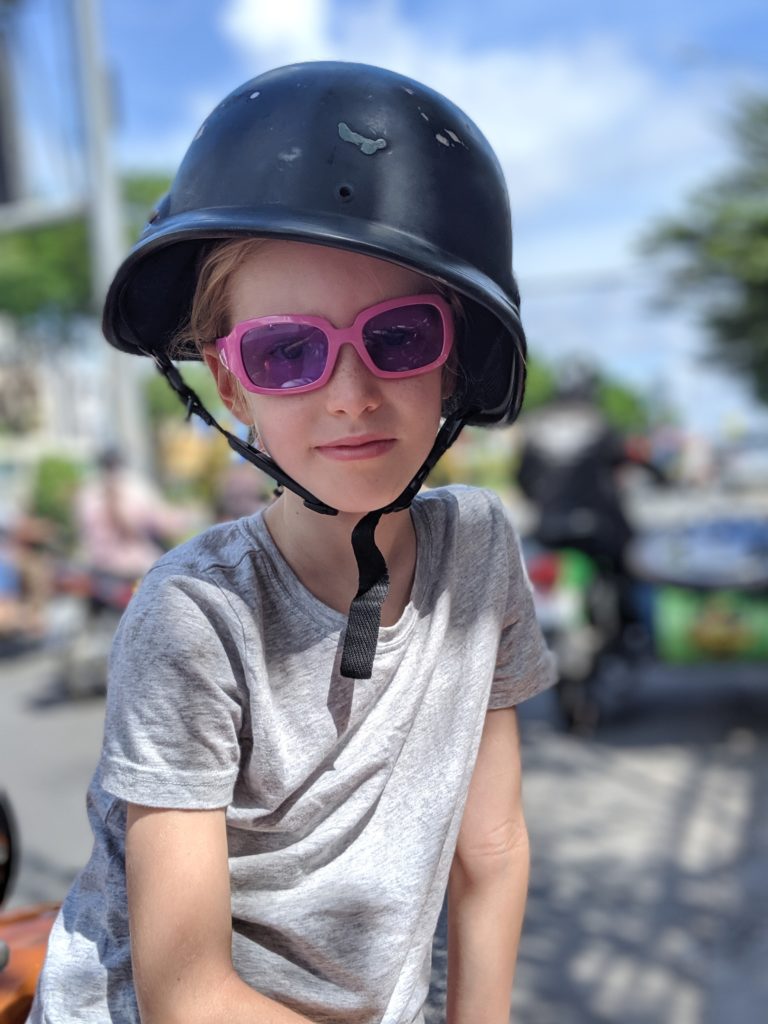
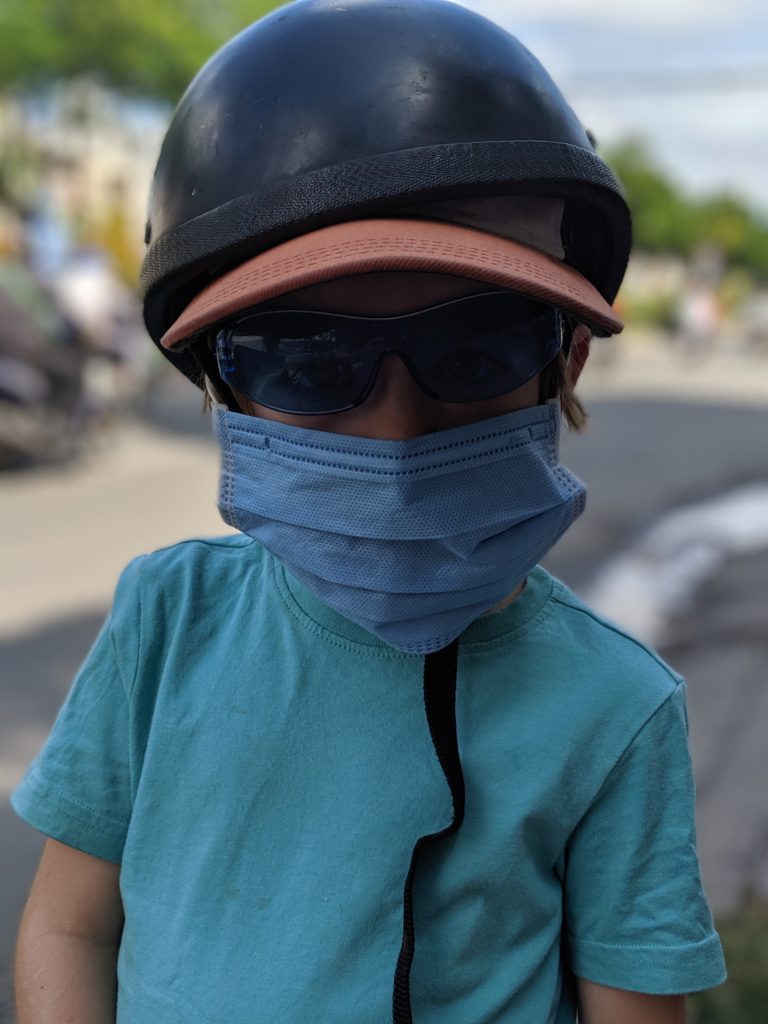
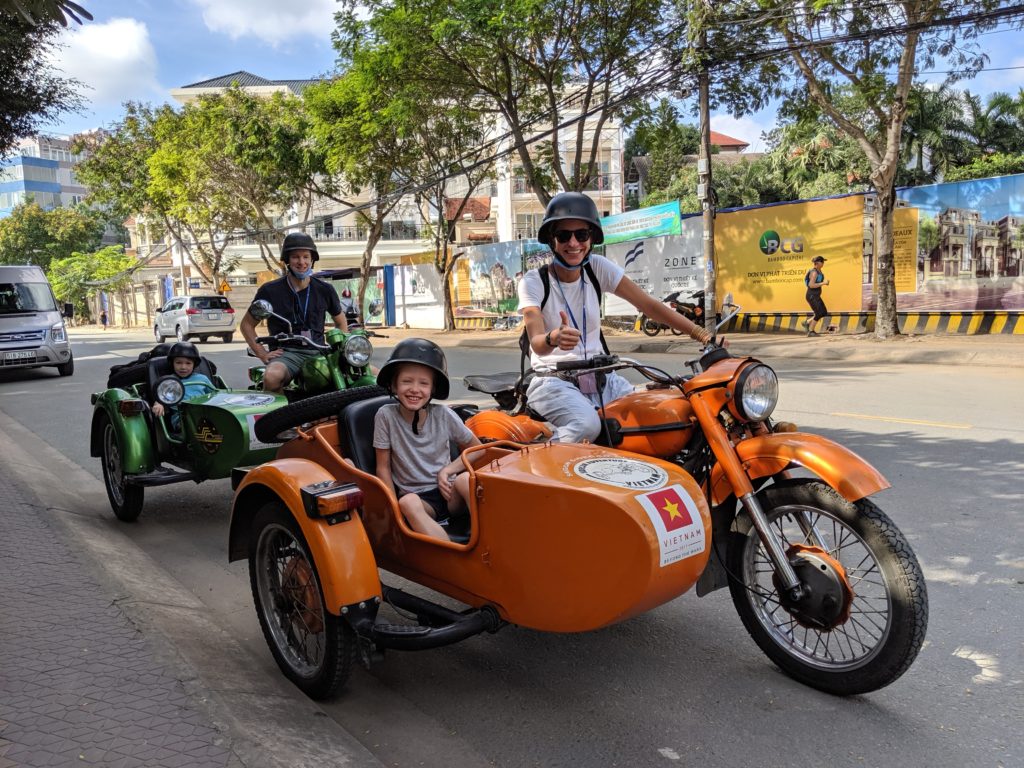
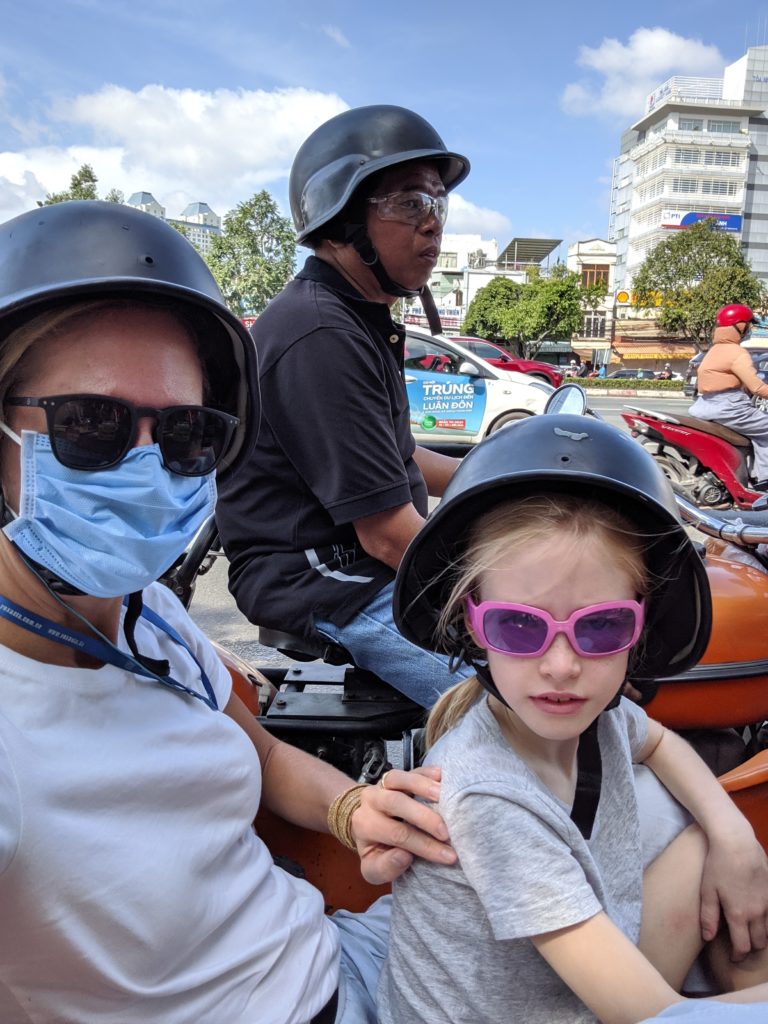
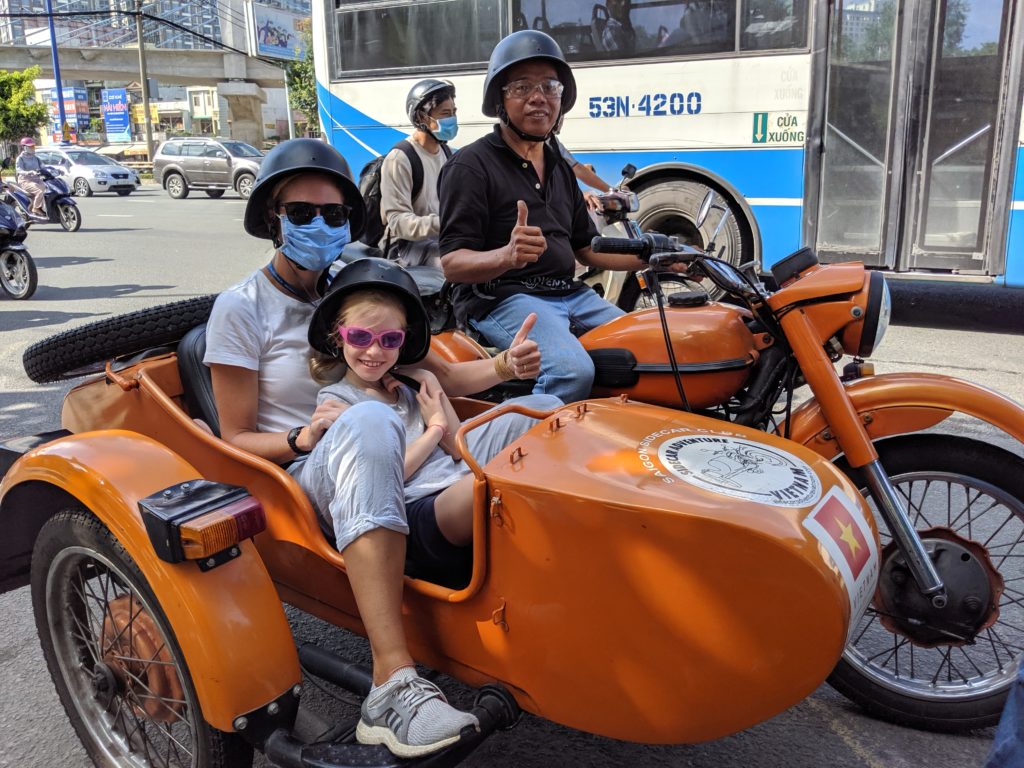
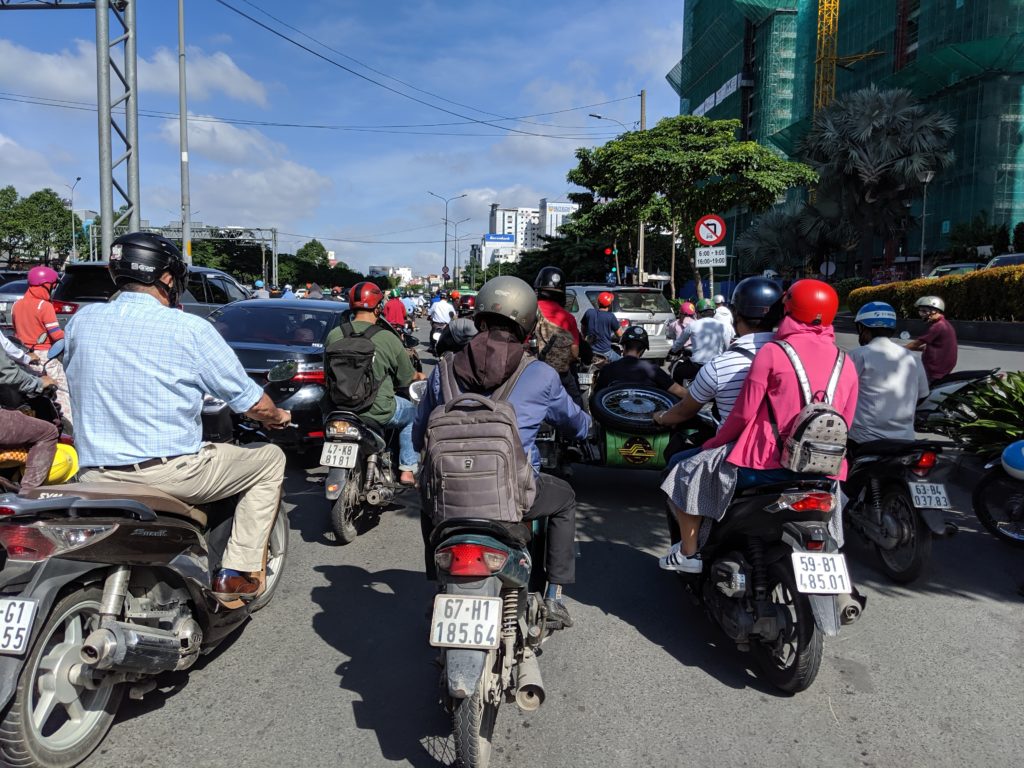
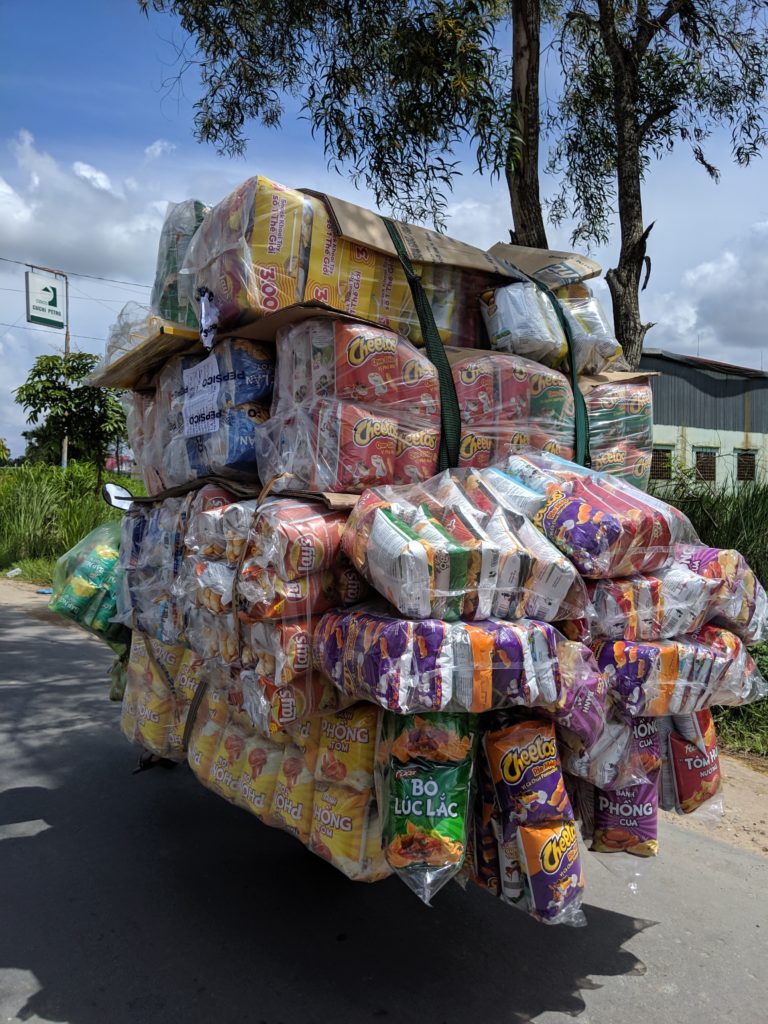
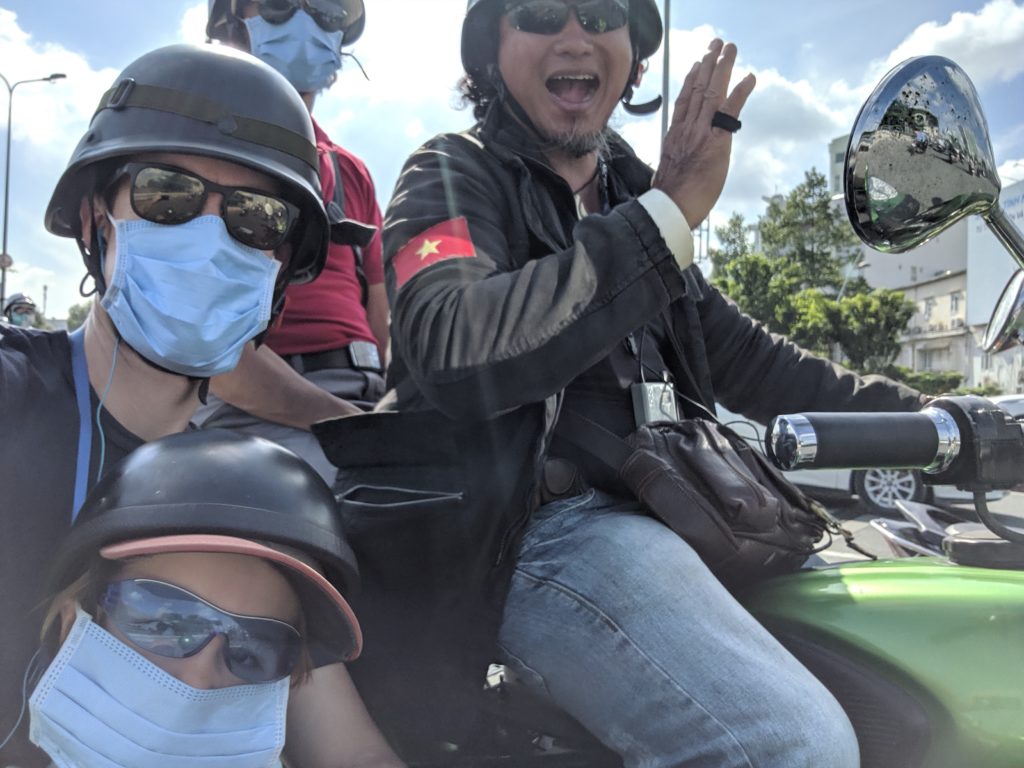
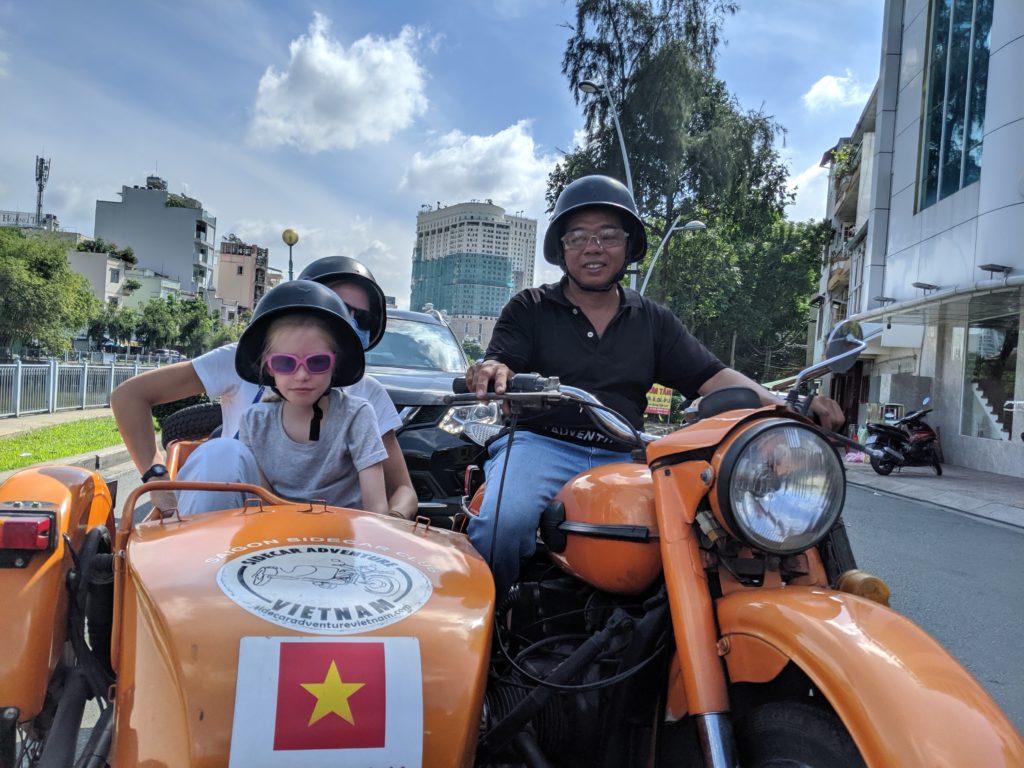
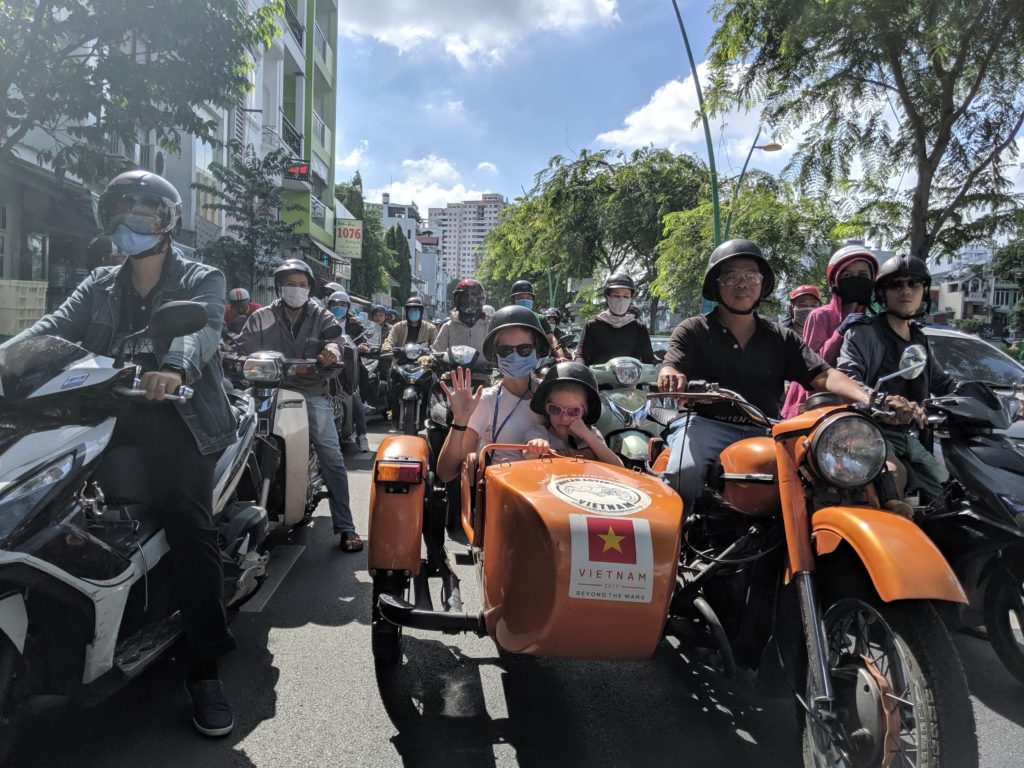
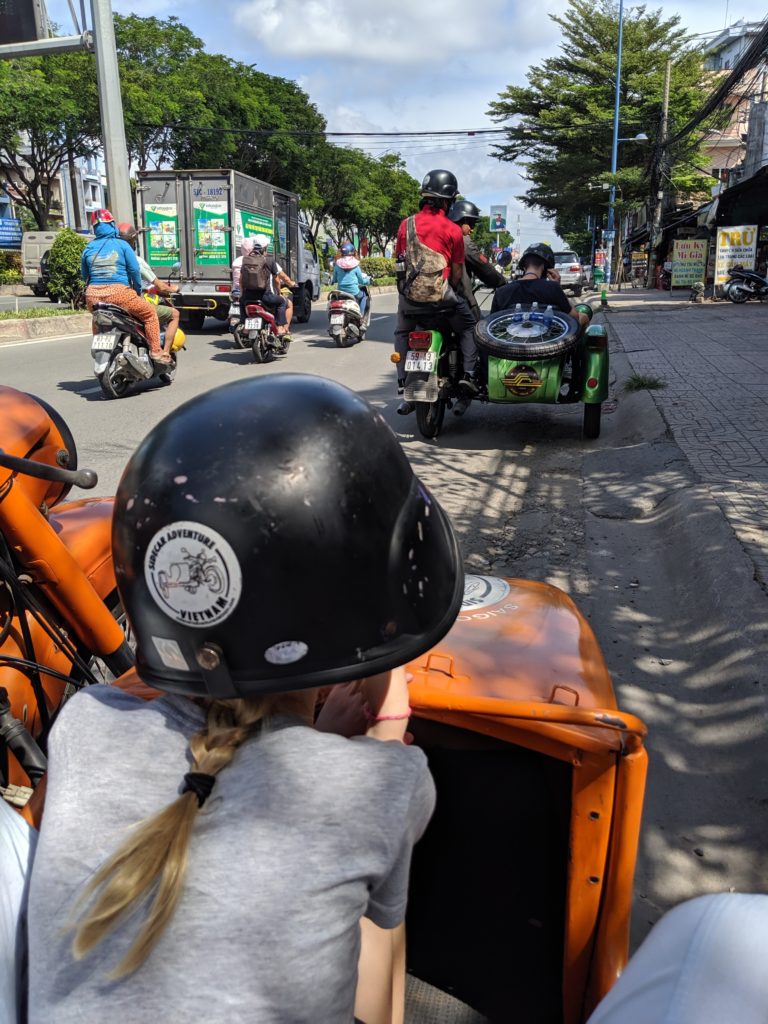
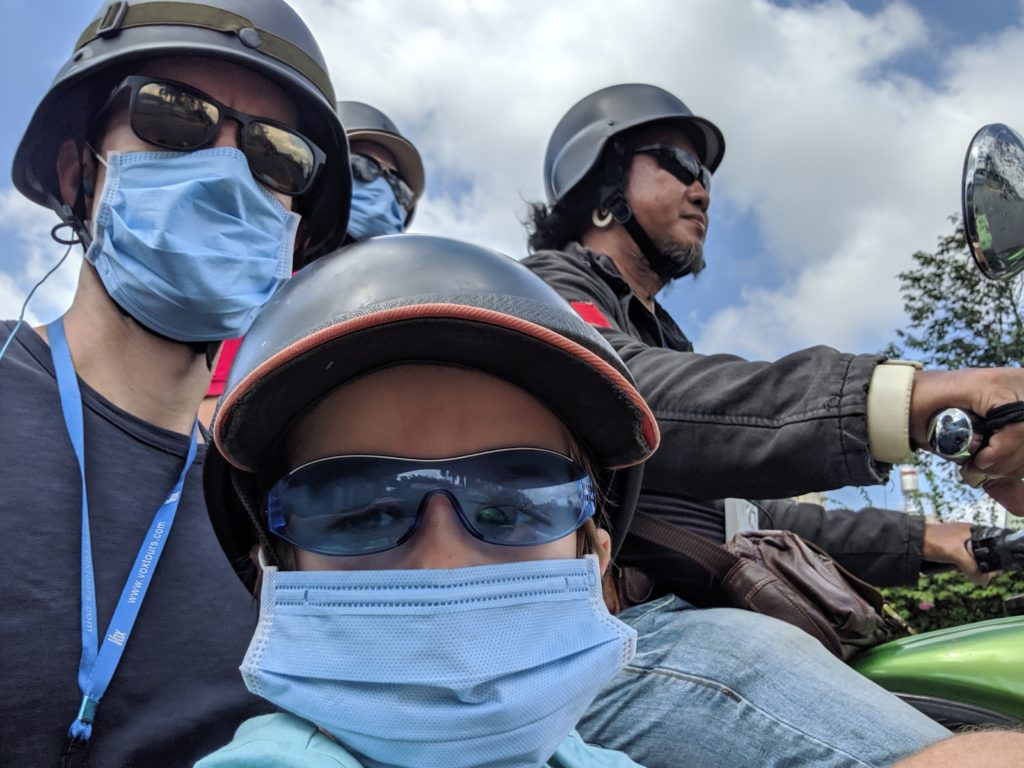
This ride might rank at the top of the “Holy shit did we really put our kids in this position” list — up there with piranha fishing in the middle of the Amazon in a tiny tin boat — but we loved it.
When you’re in a sidecar, down low among the throngs of other motorbikes, whizzing through the chaos, you’re really in the mix. It’s not a perspective of Saigon we could have gotten on our own, and we so appreciated it.
The ride was two hours! The first hour was just getting out of town — cruising along the river, flowing with the tens of thousands of commuters and even on the highway. Soon, though, we were riding on country roads, waving to roadside vendors and kids. Lots of smiles at our goofy-looking vehicles.
By the time we arrived at Cu Chi we were sunburned and covered in grit, but so glad we did it. We bid farewell to our buddies from Saigon Sidecar, and proceeded to the entrance.
The Cu Chi jungle is about 15 degrees cooler than everywhere else, and dark and somber. When you step into the jungle everything feels different — we left behind our giddy, happy little sidecar ride, and the whole vibe of the morning changed.
The kids skipped along the paths and picked up interesting-looking sticks, while Teddy and I immediately registered the place as haunting, sad and, honestly, scary.
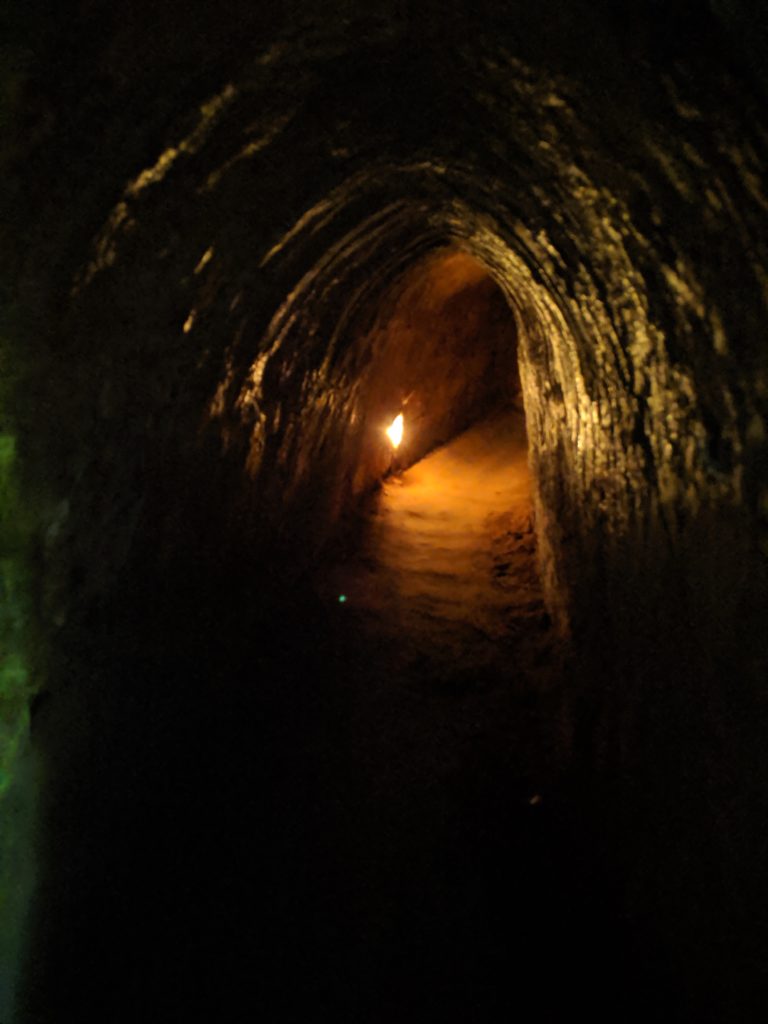
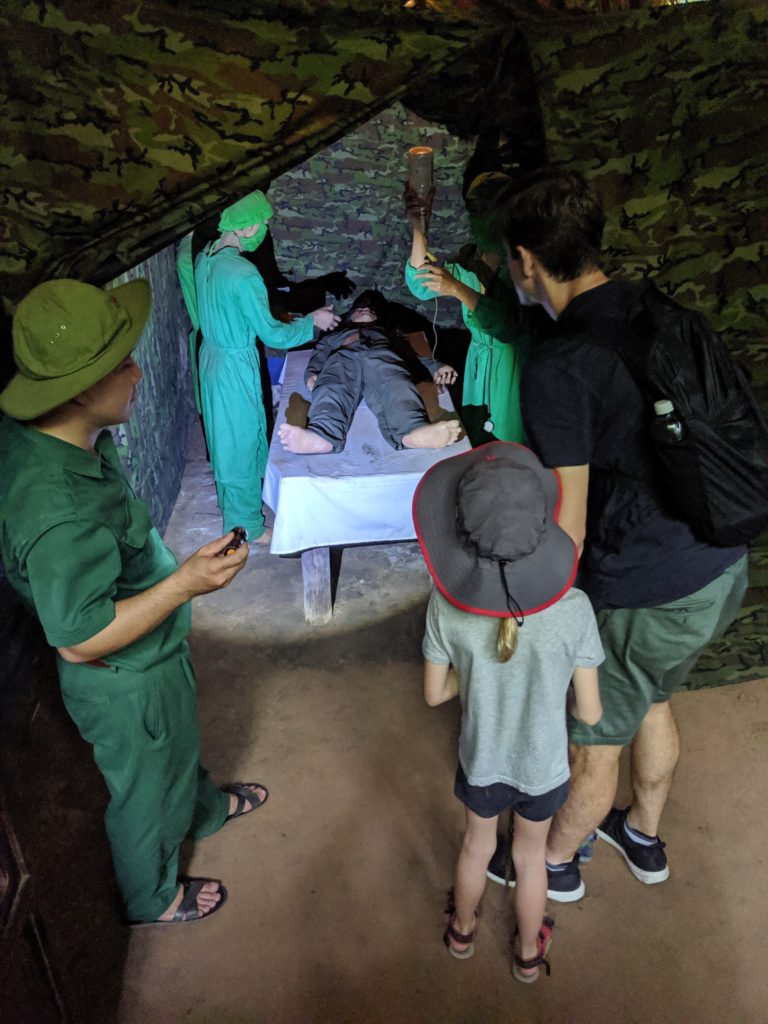
Beneath our feet were something like 200 miles of tiny connected tunnels. The Viet Cong dug them using handmade trowels. They could be 4 and 5 stories deep, and included things like hospitals, mess halls, kitchens, weapons storage — even escape hatches into the Saigon river.
No doubt, the cross section model we saw resembled an art farm.
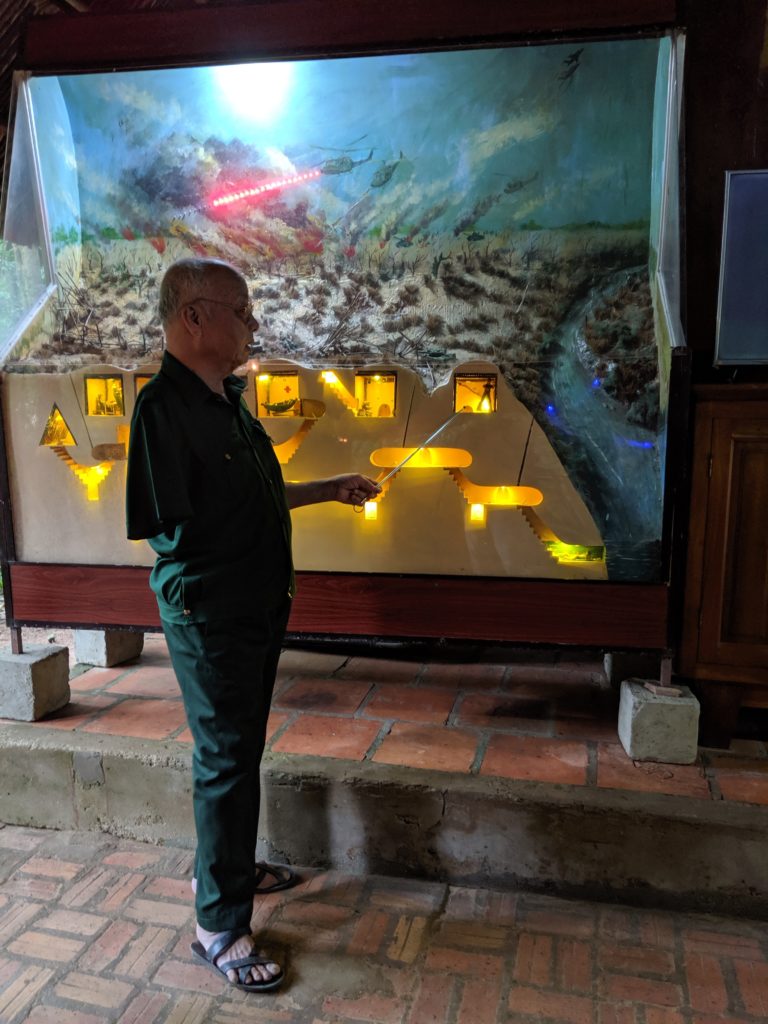
They say the Americans controlled South Vietnam during the day, but the Viet Cong controlled it at night. Seeing these tunnels helped us understand how they were so invisible and terrifying.
Like the former prisoner guides at Robben Island in Cape Town, this historic destination employs people who were also once part of its history.
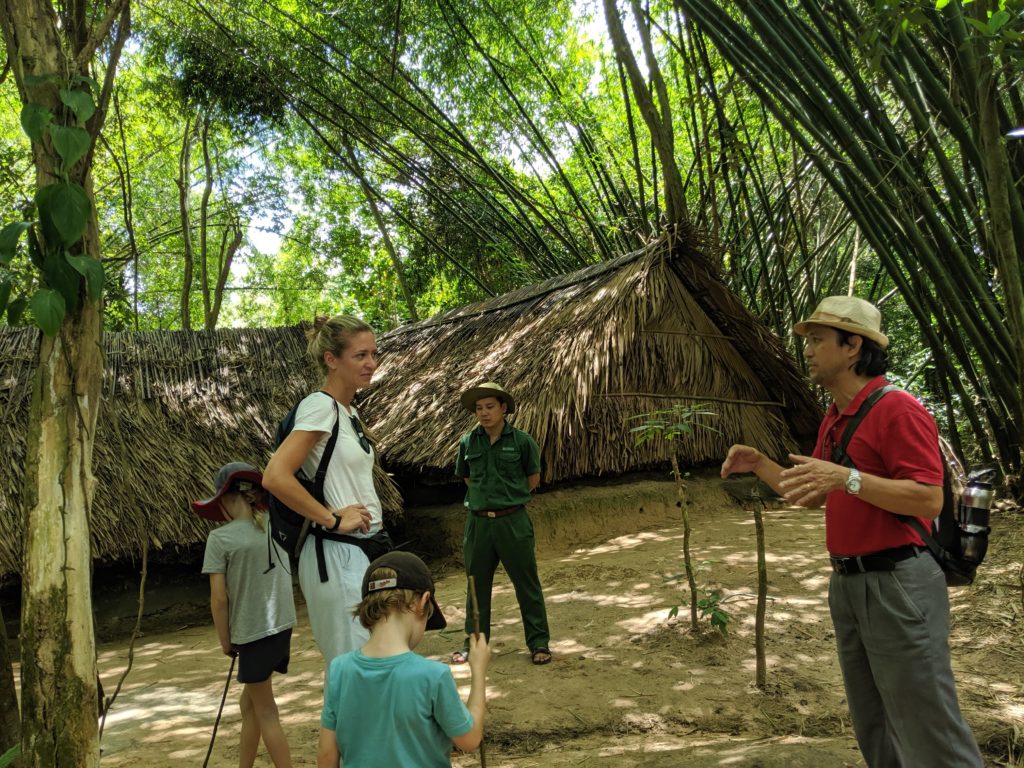
We met one of them: Mr. Nam, a former guerilla. We listened to his explanation of the tunnels, hanging on the translator’s every word, happy the kids were off playing in the dirt and not interrupting.
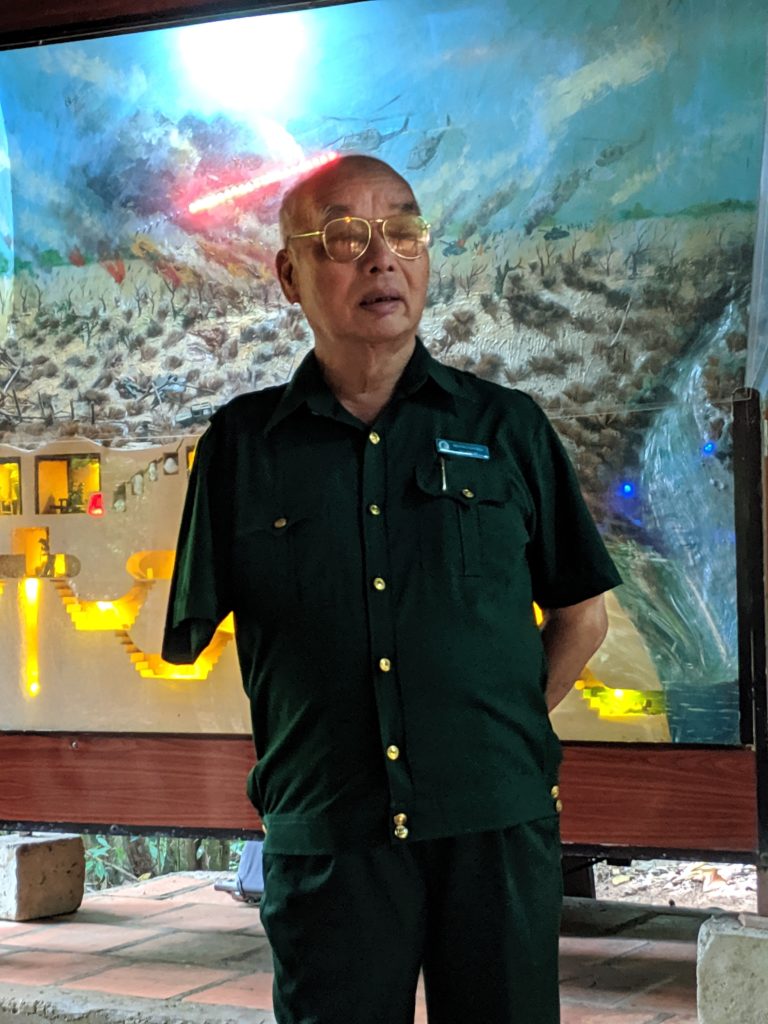
Mr. Nam was from a village near Cu Chi — in the south. His explanation of Southern-born Viet Cong reminded us (thanks, Ken Burns) that much of Vietnam didn’t see itself in terms of north and south the way Americans did. They were all Vietnamese and just wanted non-Vietnamese to get out of their country so they could have independence.
Every village in the South had its Viet Cong member, he said — and women and children helped the effort too. In our minds as Americans who’ve consumed so many movies, Viet Cong were a blood-thirsty, ruthless enemy. In their minds, they were patriots who’d stop at nothing to get their land and independence back from invading colonists, both real (French) and perceived (US).
I remember watching that Ken Burns doc and thinking — this was all such a colossal, devastating misunderstanding. Maybe that’s not the right way to look at it (?) but it’s the impression I’m left with.
Mr. Nam answered a bunch of our questions:
He started fighting when he was 17 in 1963 and didn’t stop until 1975.
He lost his arm in 1968 to an American machine gun.
He is not claustrophobic.
Cluster bombs would crater the top layer of tunnels, while a B-52 bomb would collapse five layers.
When sections would get bombed, they’d just build new tunnels around the cratered parts.
The tunnels were their only way to keep fighting — the jungle above ground was a brown, decimated wasteland from bombs and napalm. They didn’t have the strength or weapons or man/airpower the Americans did, but they knew the jungle and they had these tunnels.
When I asked him about what it’s like to host American veterans of the war — of which there are many and the number is growing — he said it was a good thing. The war is over. There is peace now, which is all that matters. He also recognizes that U.S. soldiers did not choose to come fight this war. It was an unevenly matched fight, passion-wise: His people were willing to fight to the last man for their homeland’s freedom — the Americans were dropped into a place they’d never even heard of before, required to be there by law, to fight a war whose purpose they didn’t fully understand.
Maybe it will all make sense one day.
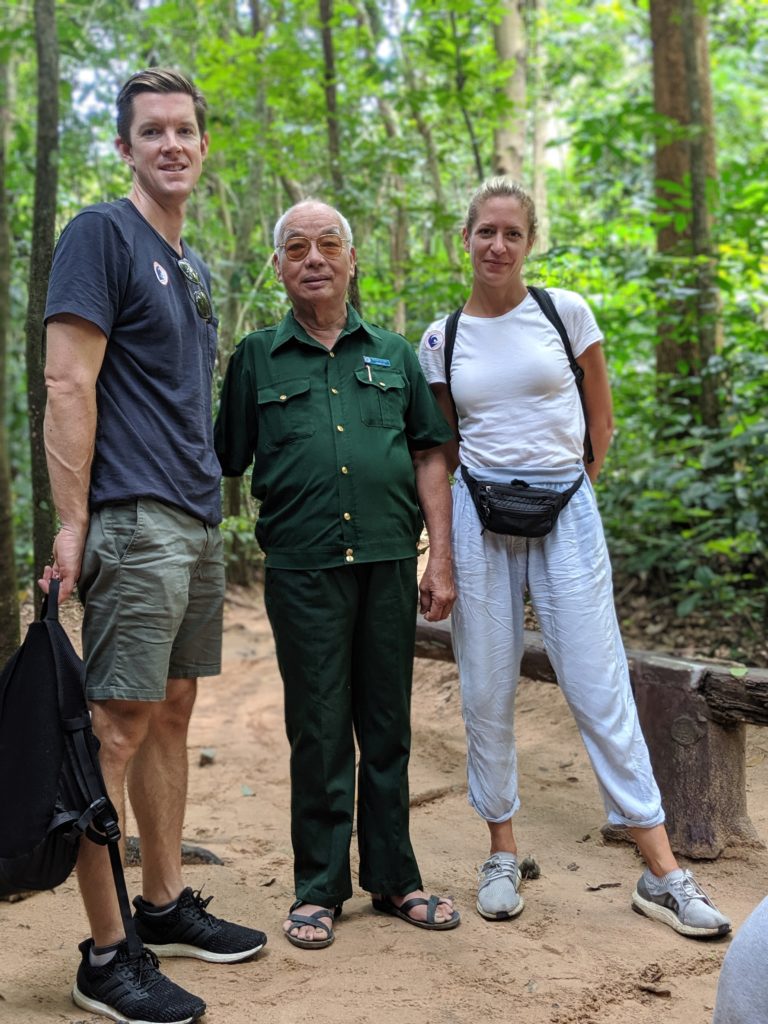
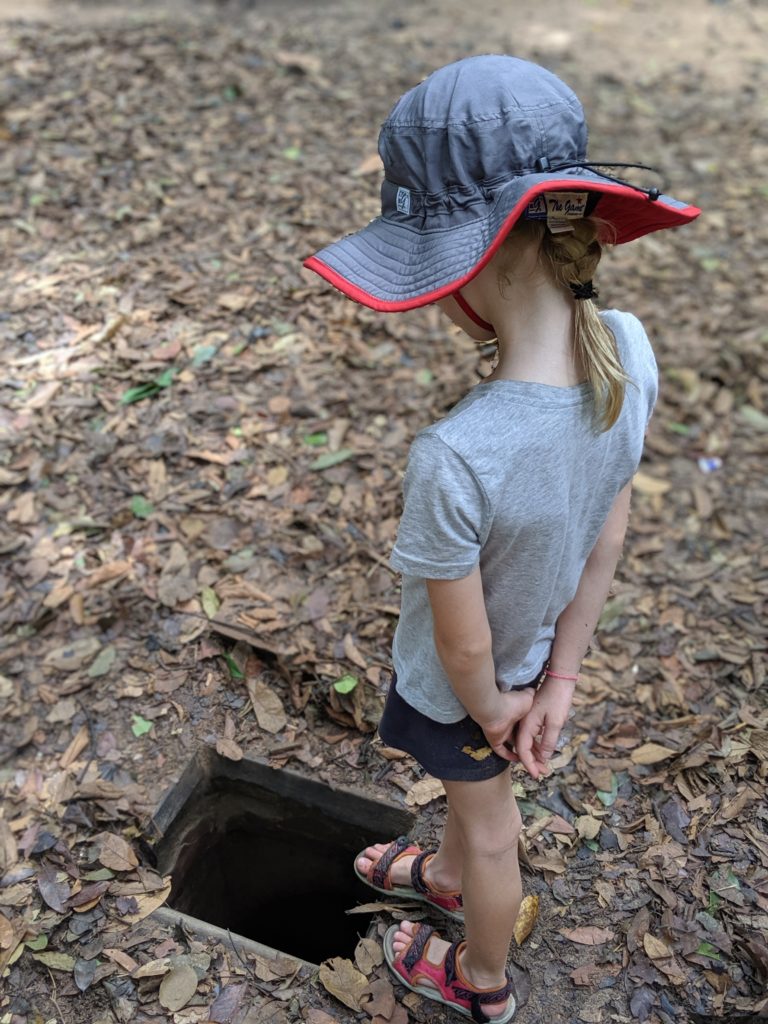
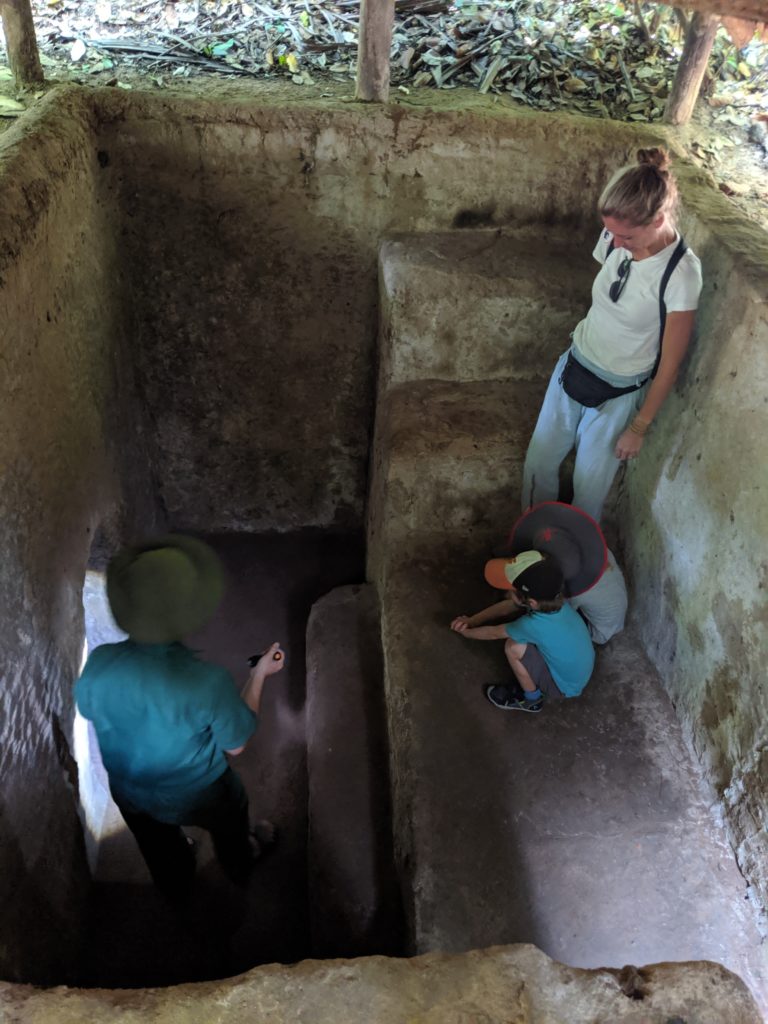
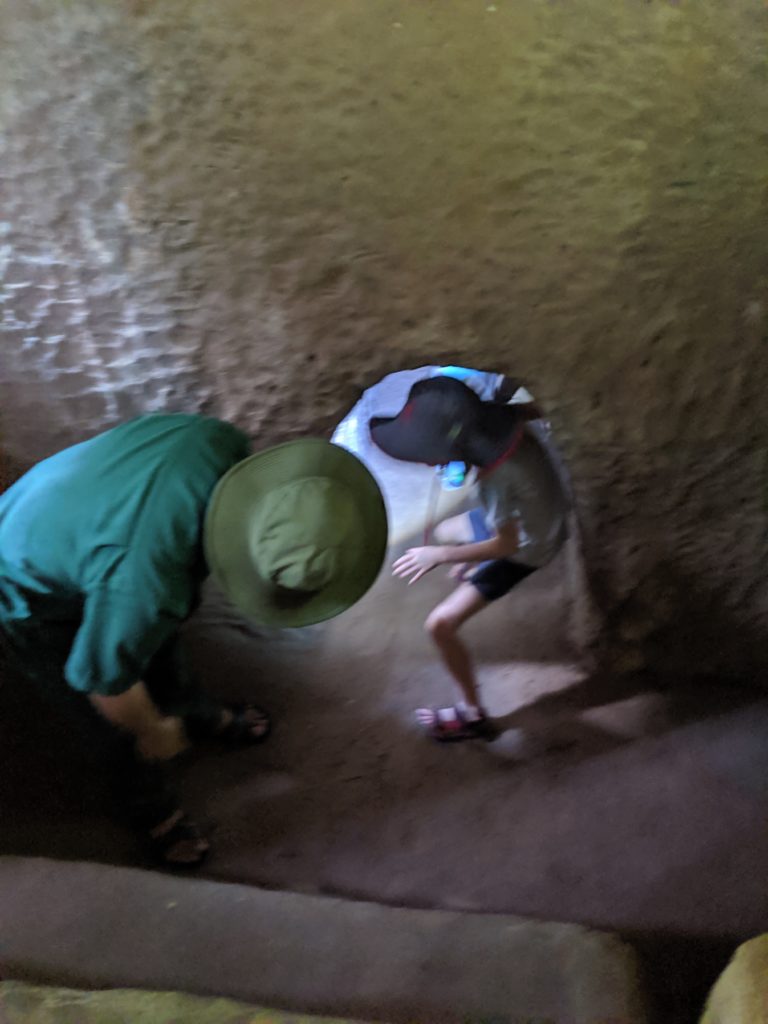
We thanked Mr. Nam and continued on our tour. Some of the tunnel entrances are as small as laptop screens. We saw a few brave tourists venturing down into them — they had to raise their arms straight above their heads to drop down below and then crawl on all fours in the dark to the exit.
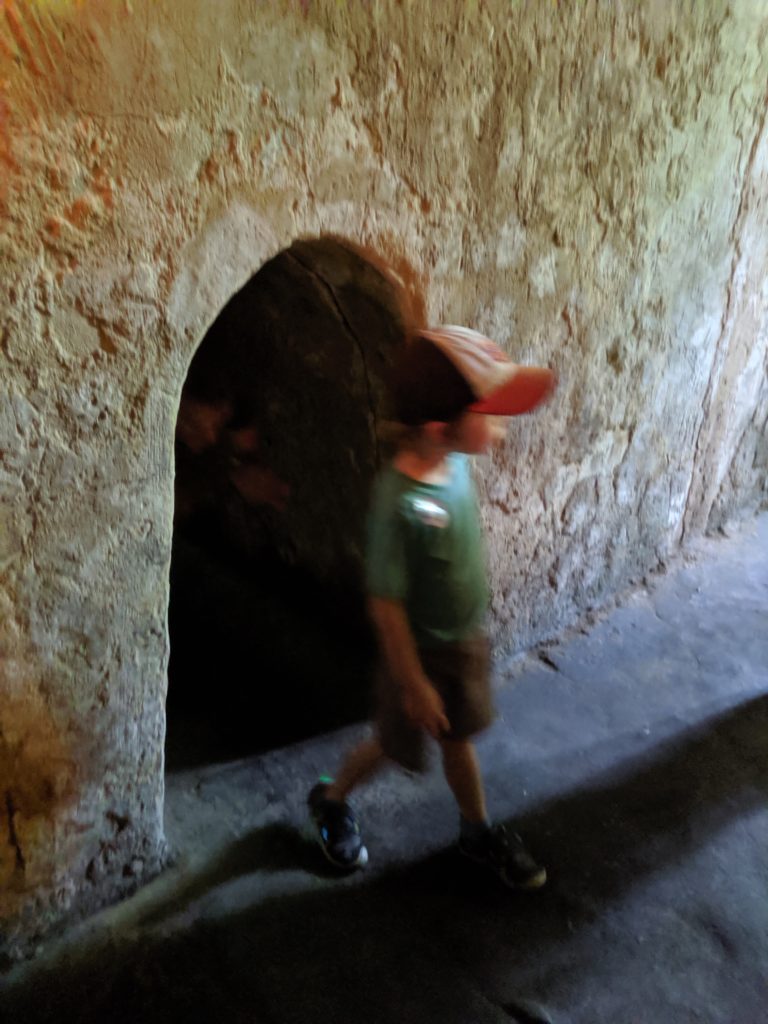
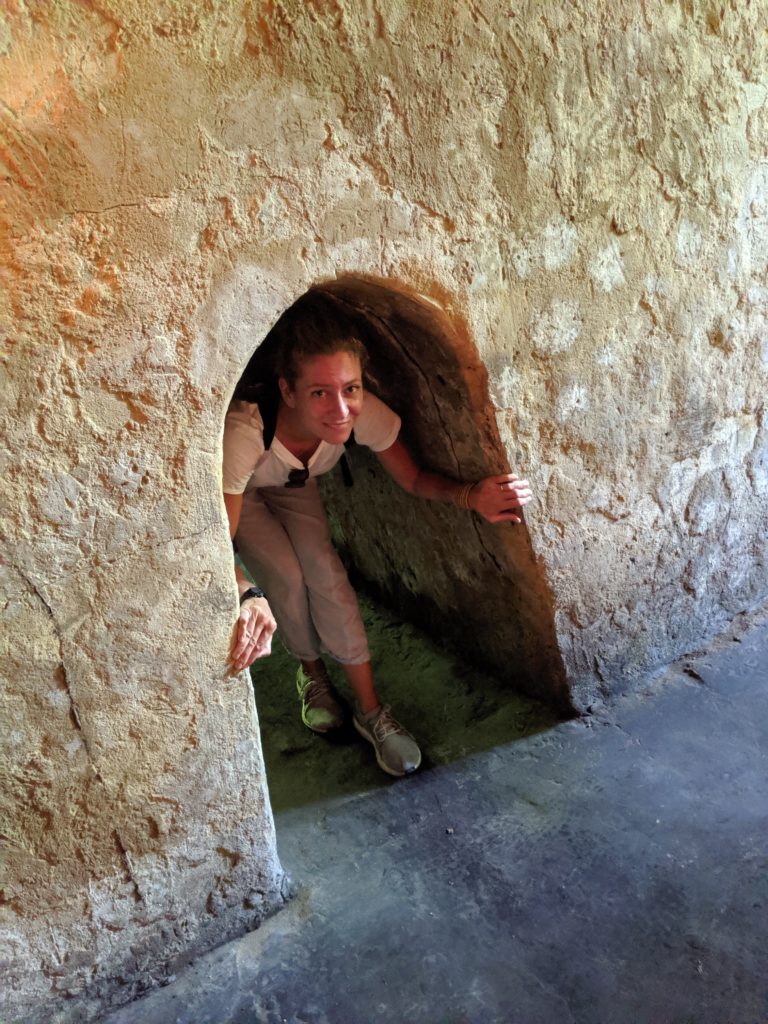
Other sections were widened for tourists. They were still terrifyingly small.
And I’m saying this as someone experiencing them on a cushy vacation. I can’t fathom what it was like to exist inside them for years of constant bombing — or maybe more horrific, as an American sent down to clear them out.
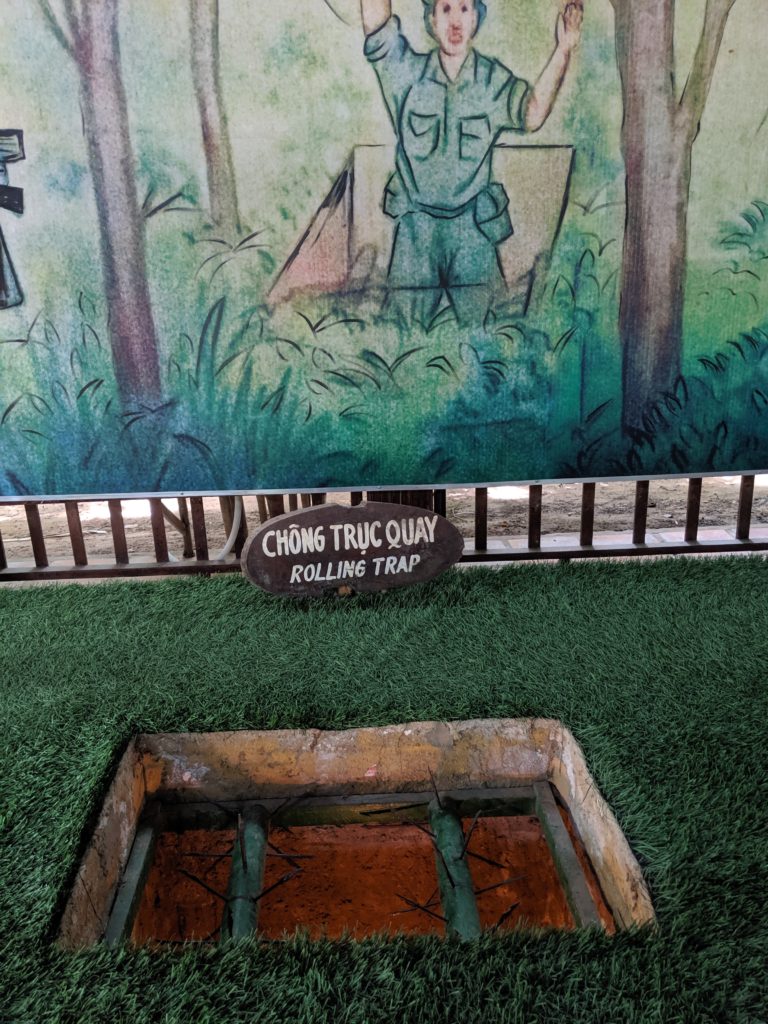
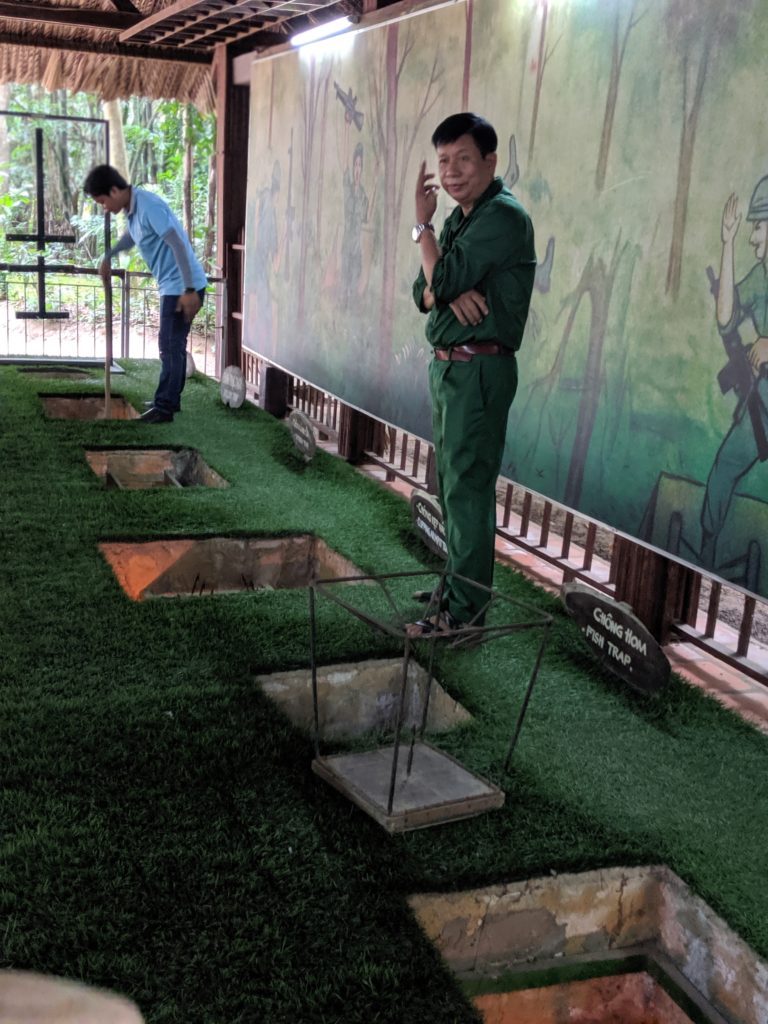
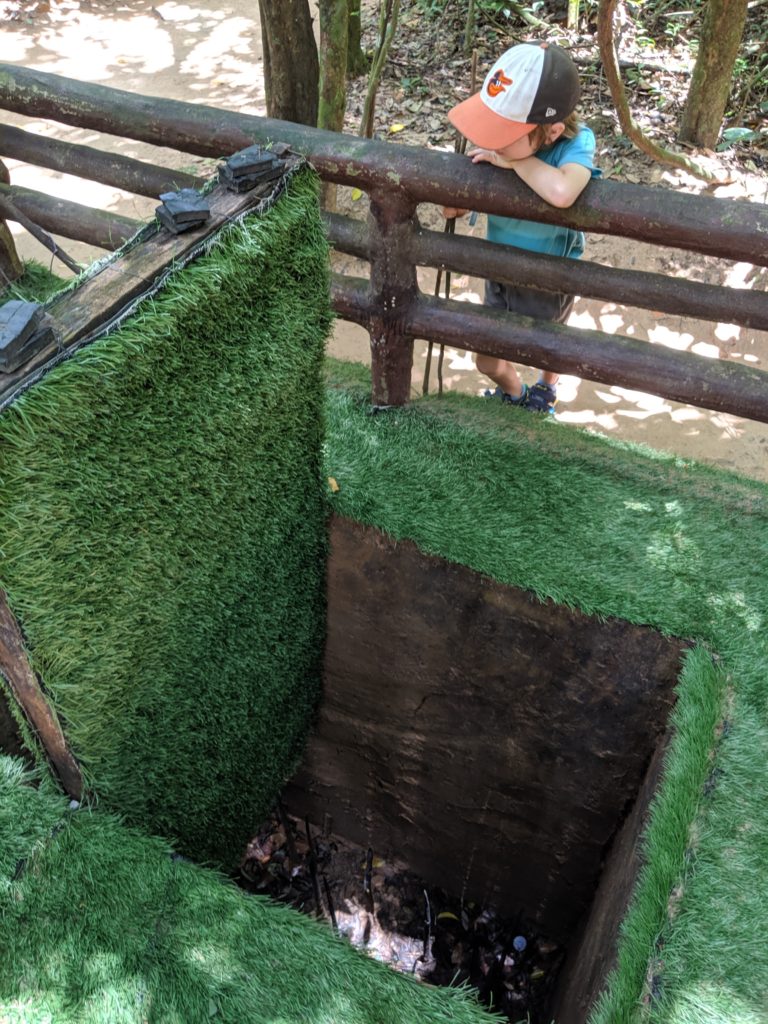
Ugh. We also learned about the sick booby traps Viet Cong fighters set up in the jungle. The human mind is so sick.
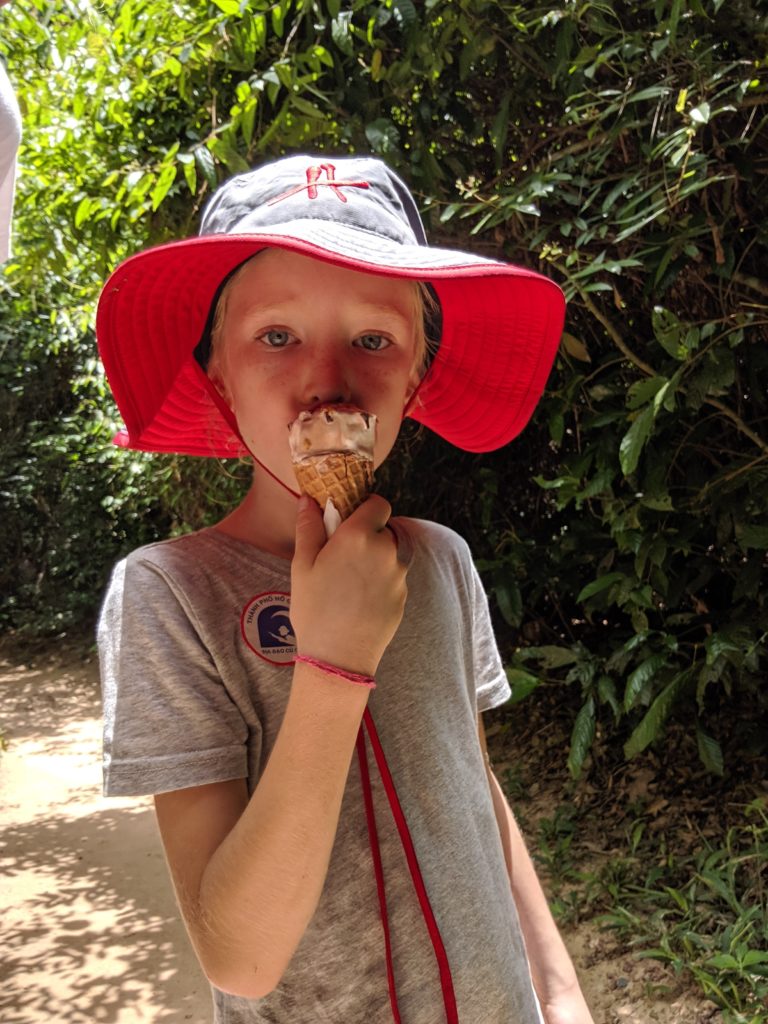
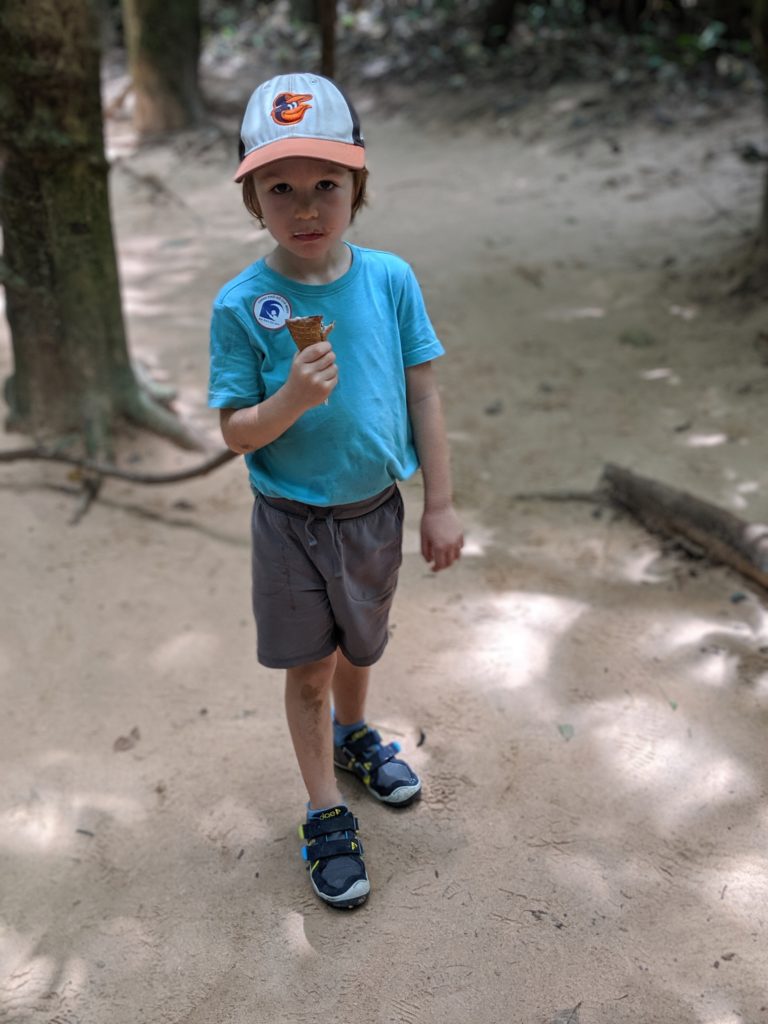
Chuong bought the kids an ice cream at the end as we walked back to our van.
Crazy: Two American children eating ice cream and skipping through the same forest that, 50 years before, was hell on earth.
Our heads still spinning, we had one more stop before lunch: A cricket farm.
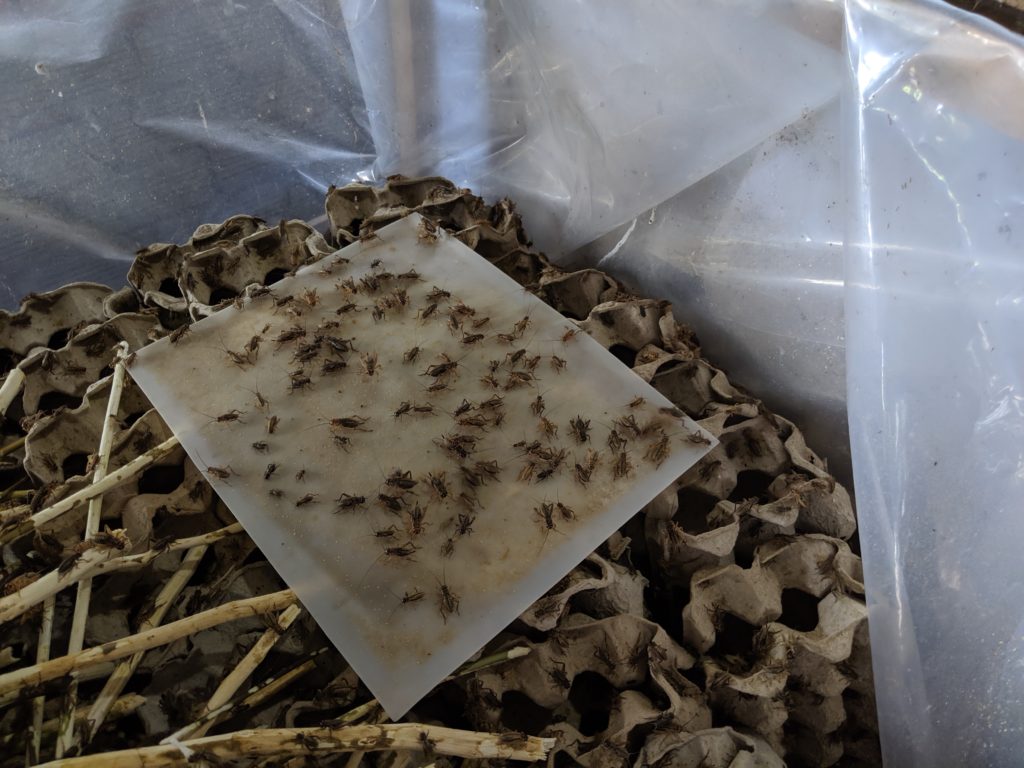
After seeing how they raise and house crickets, we were invited to sit for a…snack! Fried crickets, to be precise.
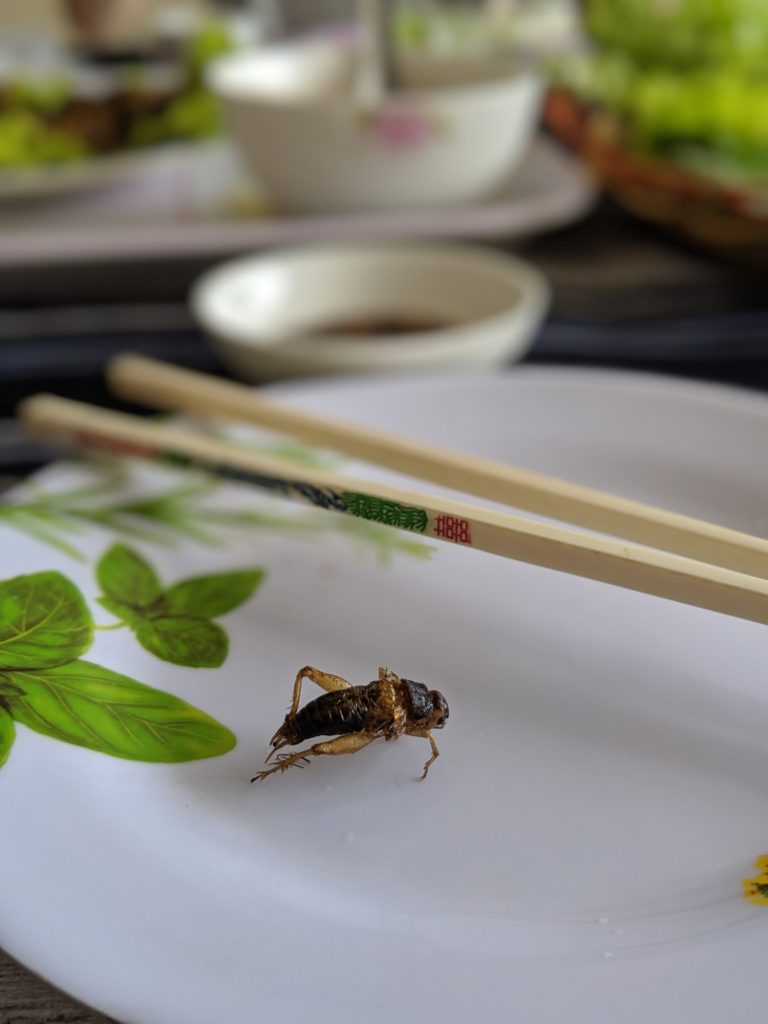
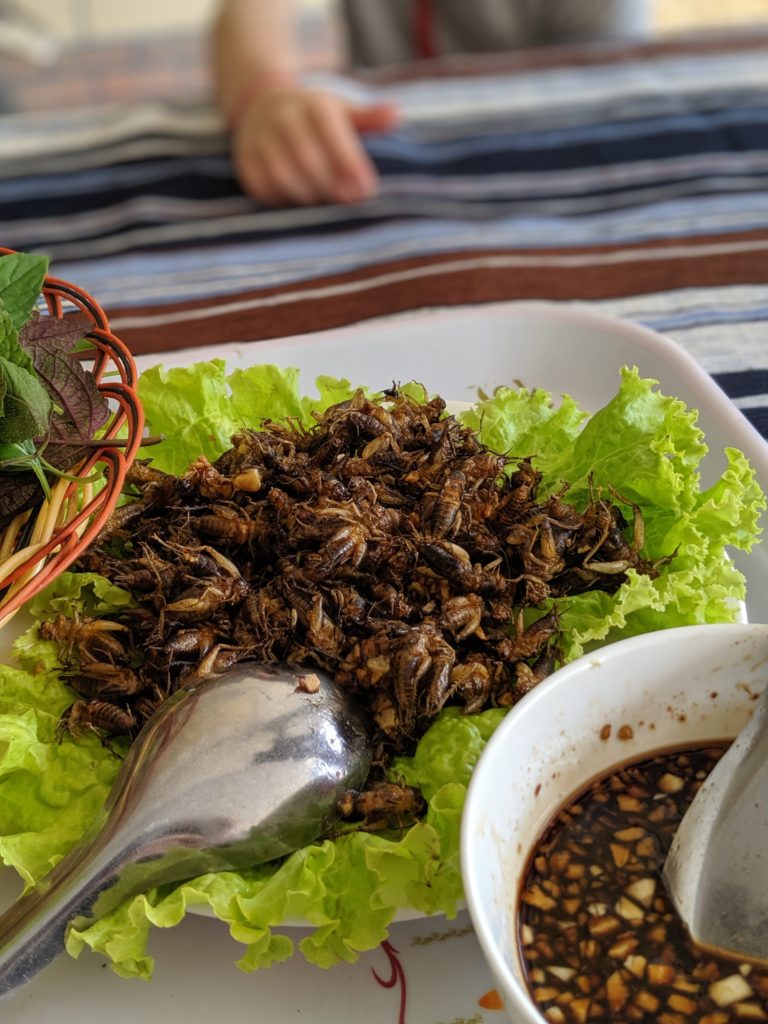
Willa is so brave. Not only did she try the tunnels at Cu Chi, she ate one of those crickets. Used her new chopstick skills and just popped it right in:
I went next, followed by Teddy. We weren’t as brave as Willa and had to wrap our crickets in spring rolls:
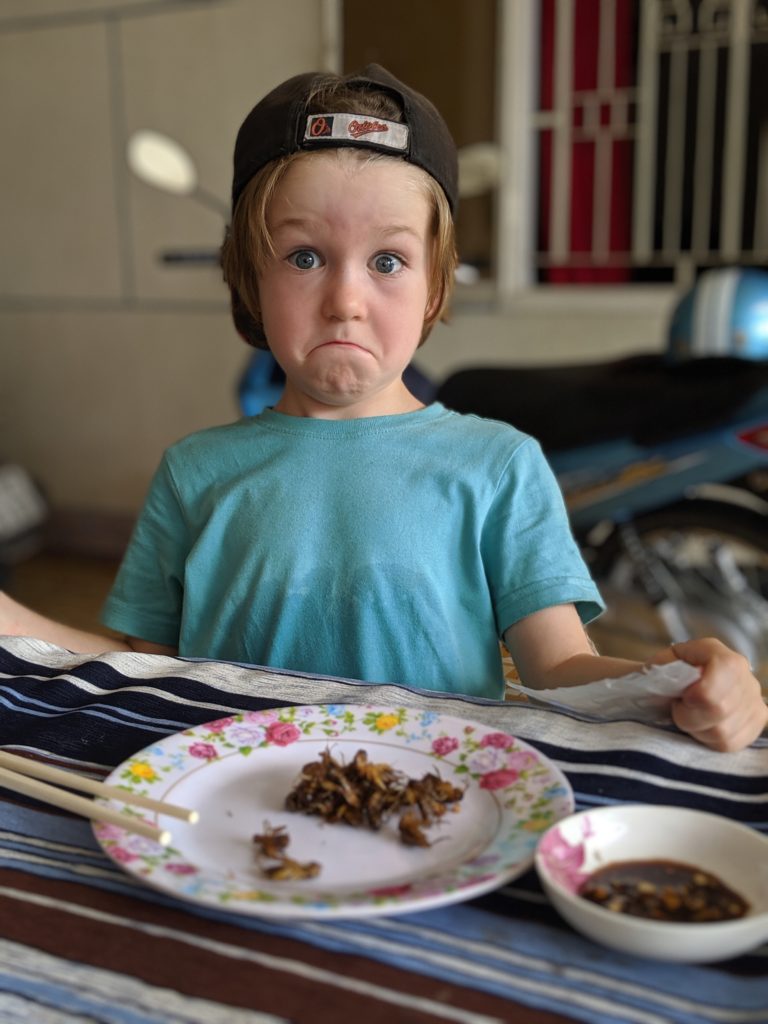
James declined to participate. His face says it all:
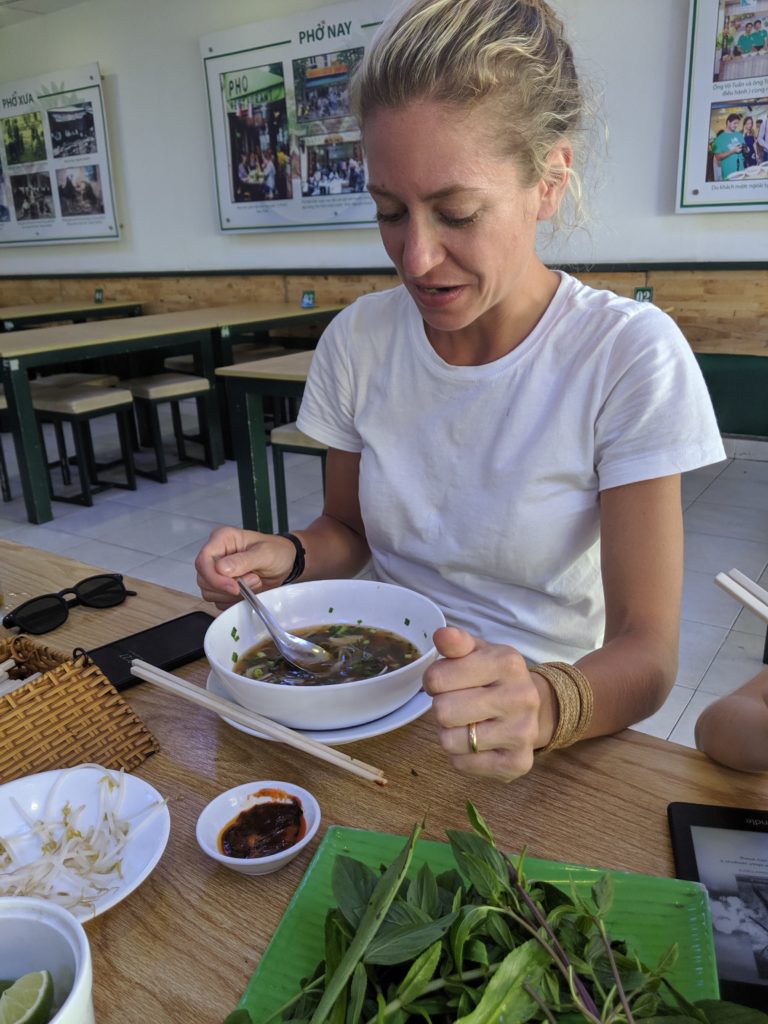
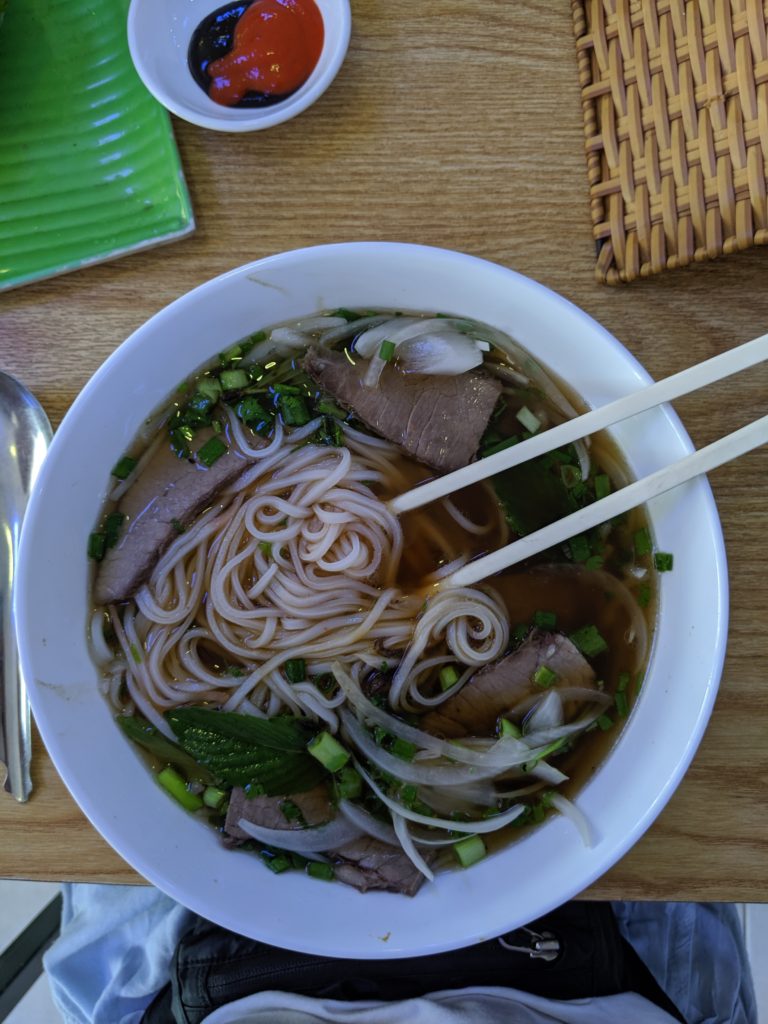
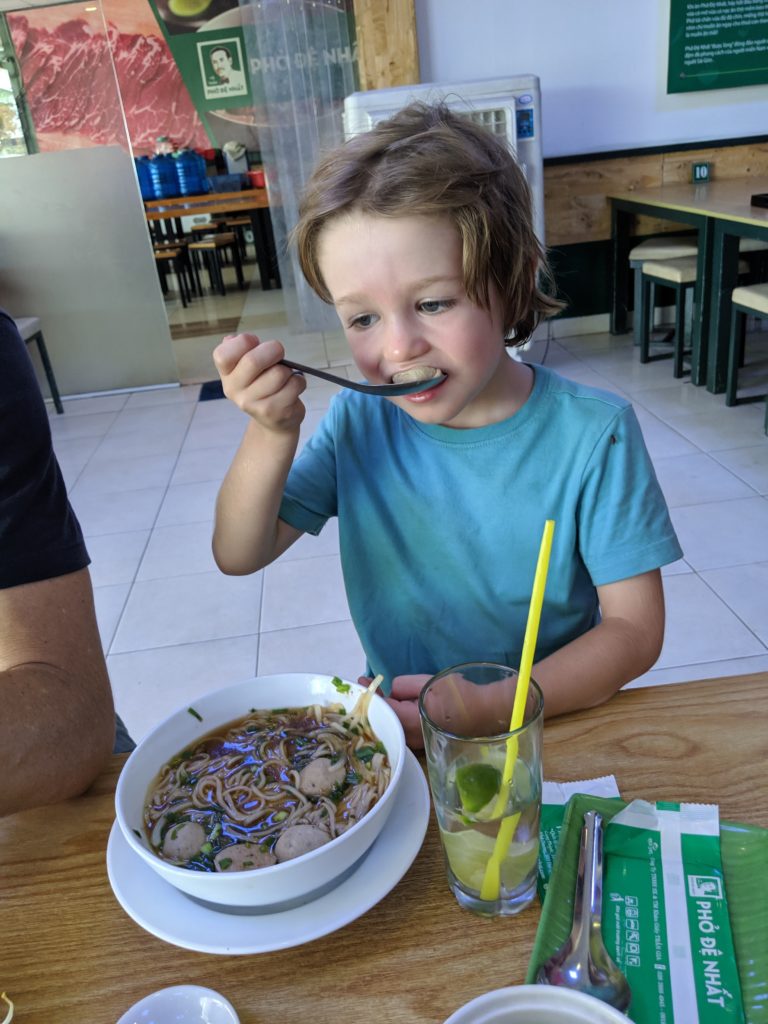
By the time we wrapped there, it was almost two and our original lunch spot was already closed, so Chuong improvised. We needed to eat Pho on our last day — we hadn’t had any at all the whole trip because we were always too hot to eat soup.
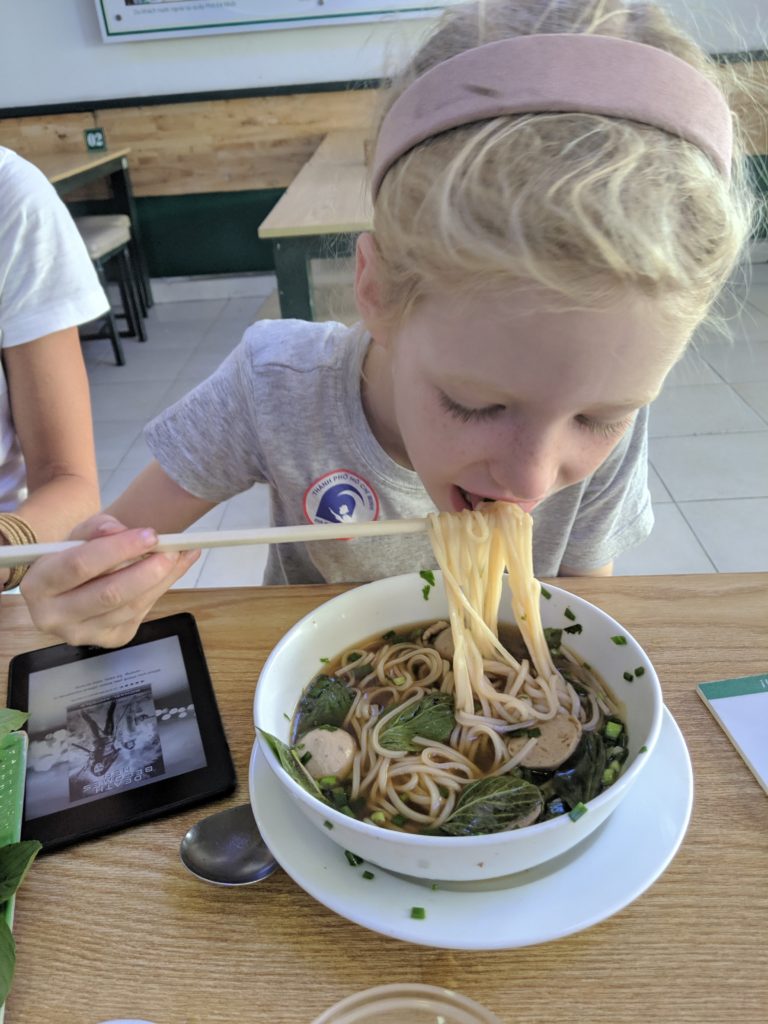
We went to a chain place with Chuong and dug in. It was DELICIOUS. The kids are still talking about it.
We sped back into town because we had one last stop: Teddy and I wanted to see an exhibit at the War Remnants Museum dedicated to combat photojournalists from the war.
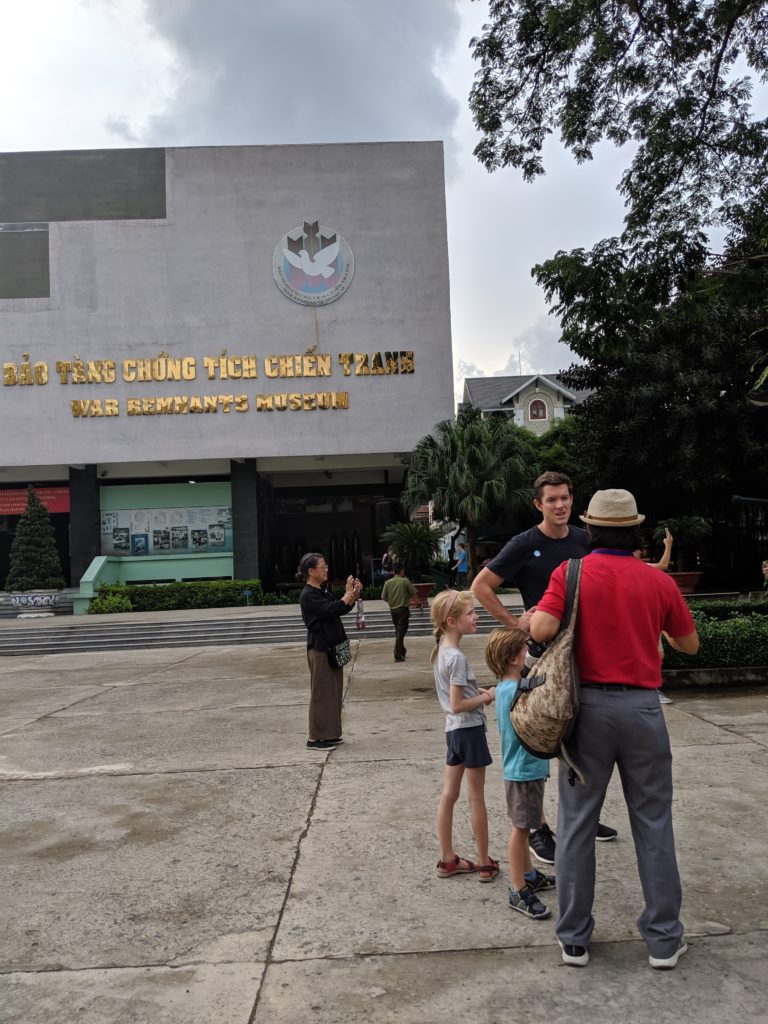
The kids got to use their iPads and hang with Chuong in the lobby while we spent nearly an hour in the exhibit. It was particularly interesting because of “The Lotus Eaters” novel we’re reading.
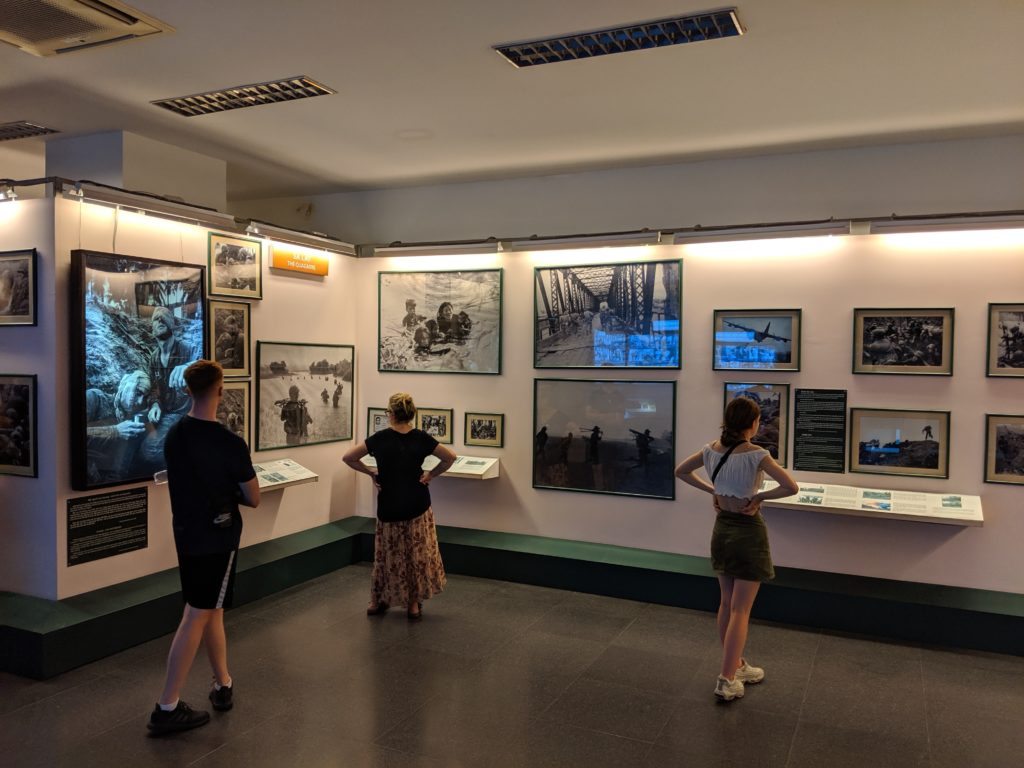
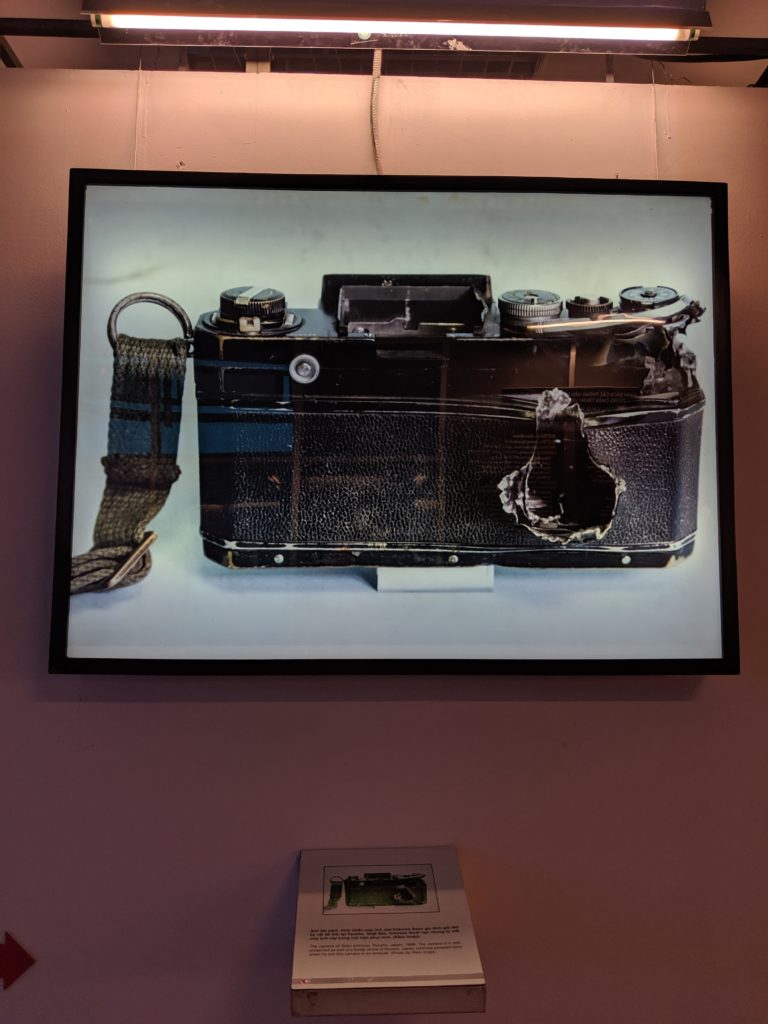
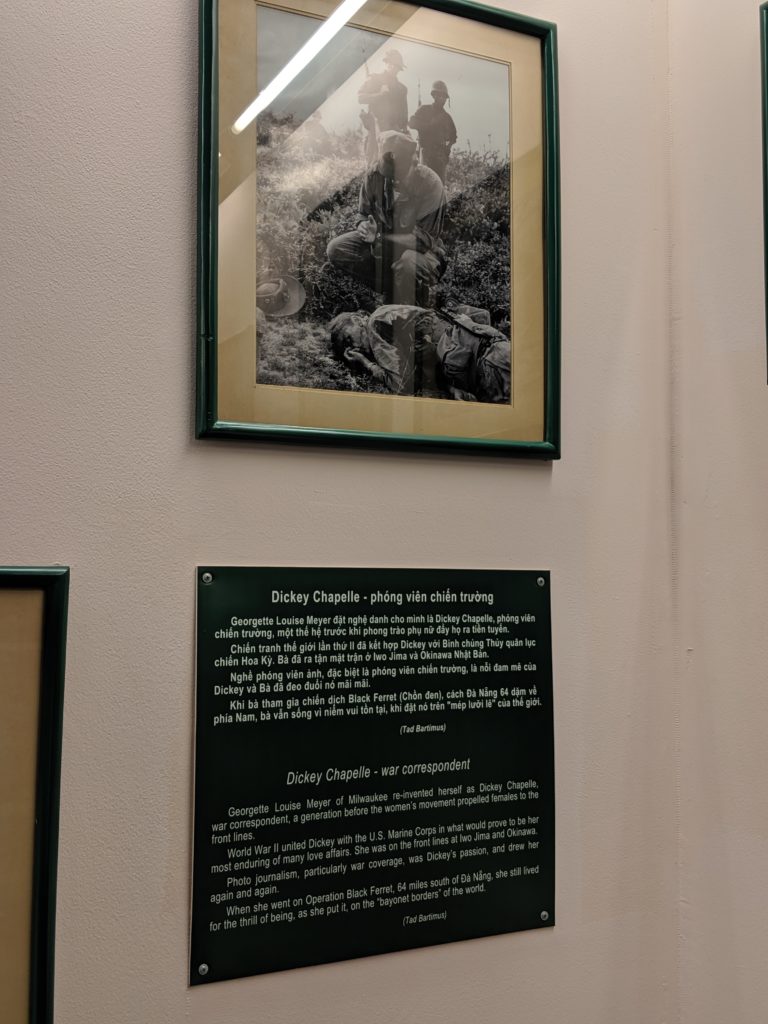
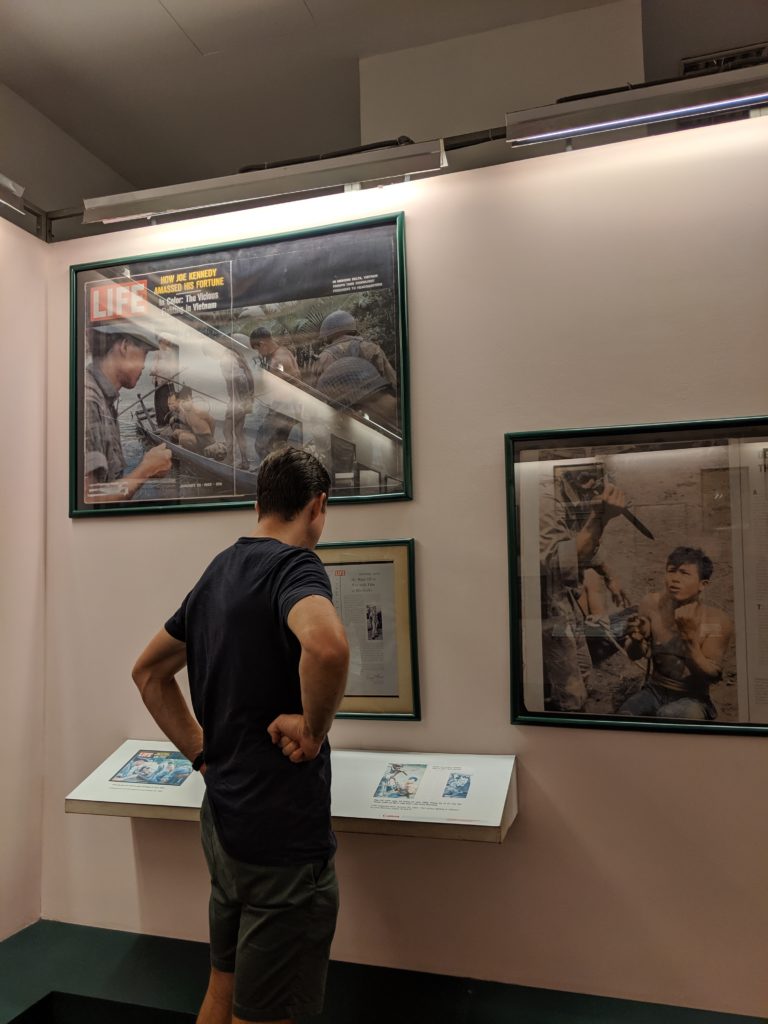
The museum has some very intense exhibits that we didn’t visit, including a recreation of the post-war internment camps where former south Vietnam soldiers were tortured. Chuong said these camps made John McCain’s Hanoi prison look like a beach vacay. Ugh.
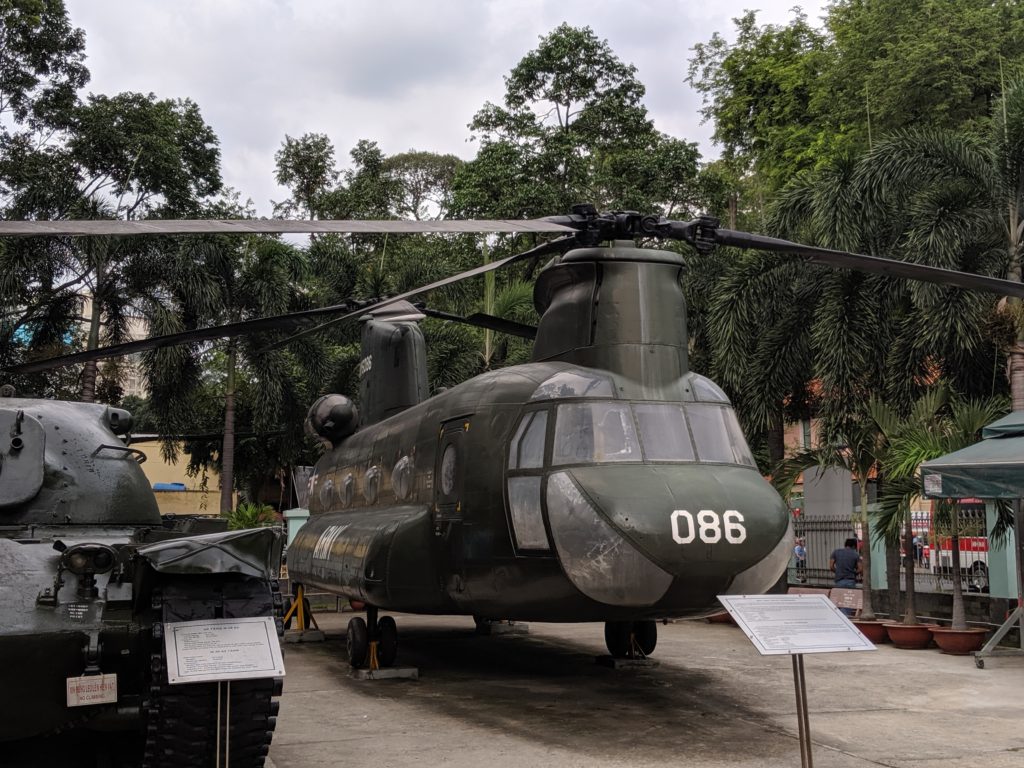
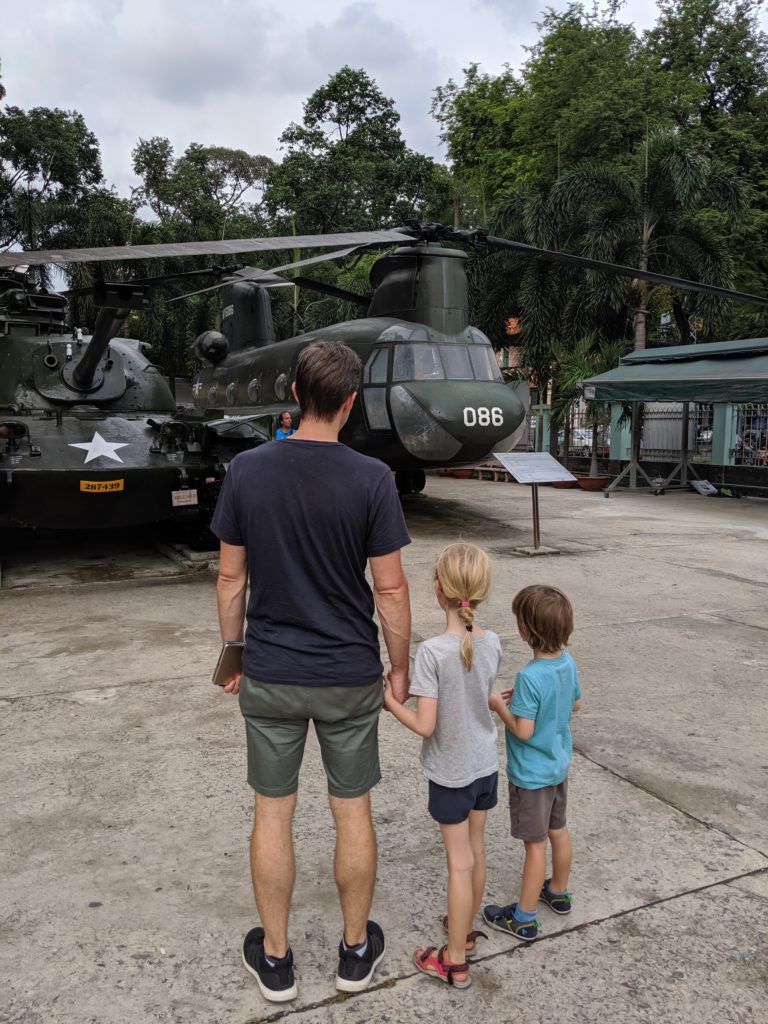
Powerful to see a Chinook up close.
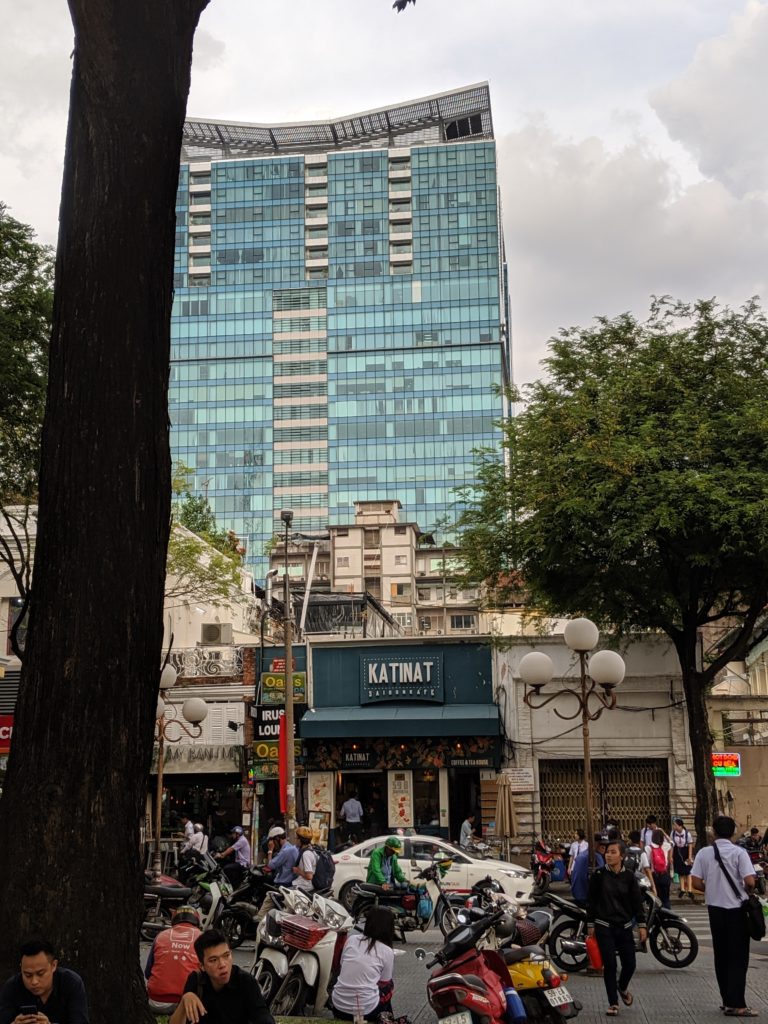
On our way back to the hotel we saw the rooftop where the famous last chopper out of Saigon took off. Contrary to what we all think, it wasn’t the US Embassy compound. Lots of choppers did leave from the embassy, but the very last one out of town went from this roof. It was the CIA headquarters. Today it is an office building. Life just moves on.
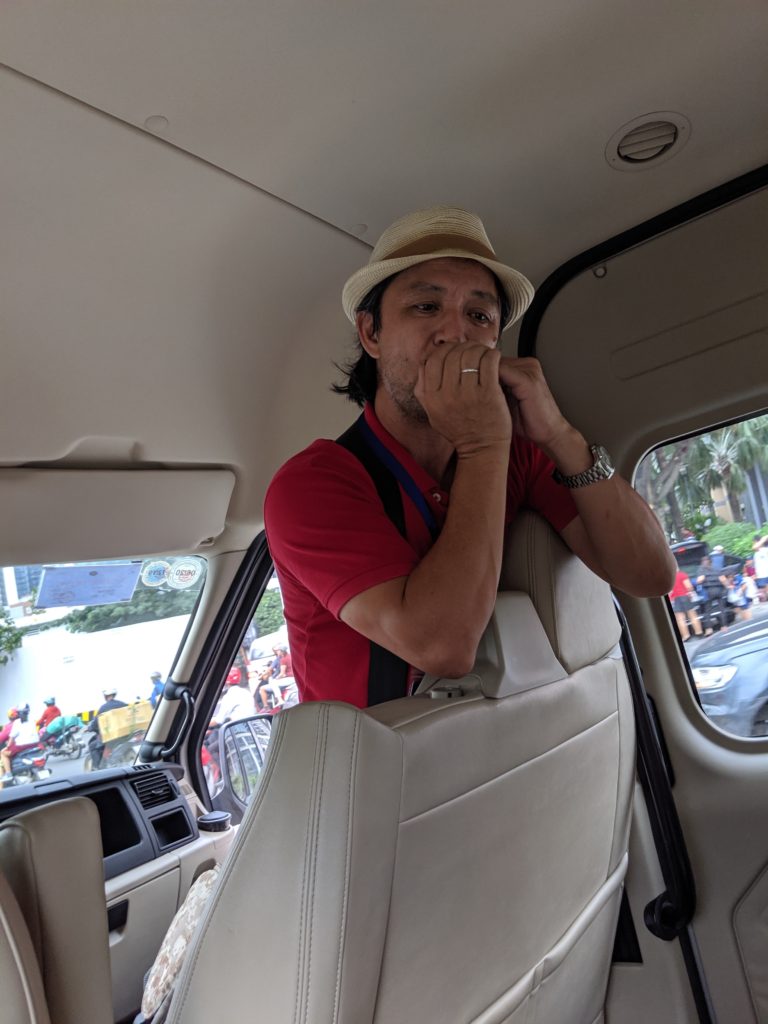
Chuong regaled us with a few harmonica songs on the ride home (“Que Sera Sera” and some Beatles), and then we bid him farewell for the night.
We did dinner by the pool, and called it a night.
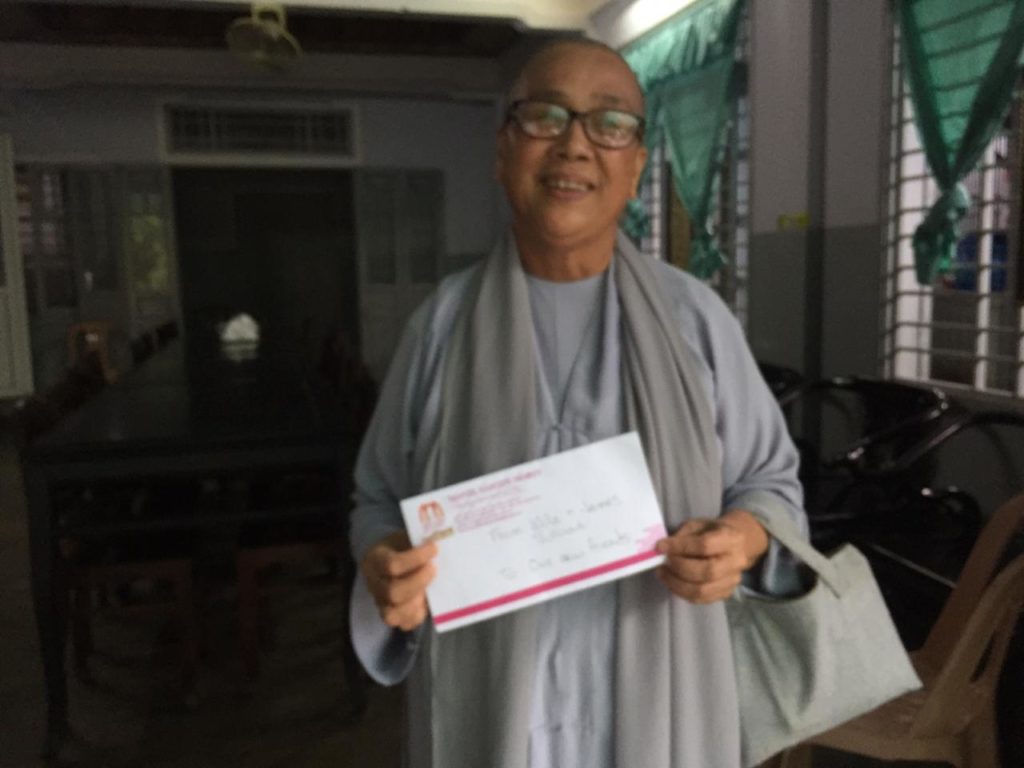
But before we did, we got a WhatsApp message from our last guide, Jan, from Hue. He texted us a picture of the head nun at the Hue orphanage we’d visited holding up the envelope holding the $8 Willa and James had donated from their allowance as we left town.
LAST THOUGHT
We’ve been impressed by the kindness and the resilience of the Vietnamese people. We’ve learned that it’s very much part of the culture to acknowledge a conflict…and then forget it and move on. In personal relationships, in business and in war. Grudges aren’t a thing, culturally. I’m not sure what came first — generations of learning to cope with extreme hardship or a genetic predisposition to be that way — but it’s clearly helped the country grow and thrive in spite of its recent history.
